
Travel creates a unique hygiene challenge: exposure to unfamiliar pathogens, disrupted routines, confined spaces with many other people, climate and humidity changes that affect skin, circadian disruption from time zone changes, and reduced access to the products and practices that form the familiar home routine. Travel-associated illness is common — traveler’s diarrhea affects 30-70% of international travelers depending on destination — and many of the most common travel health problems are either preventable or significantly reducible with targeted hygiene and behavioral practices.
Flight hygiene: the most concentrated exposure environment
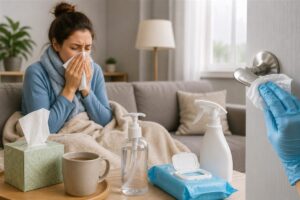
Airplane cabins are low-humidity environments (typically 10-20% relative humidity — significantly drier than most indoor environments) with recirculated and filtered air. The low humidity dehydrates mucous membranes, which are part of the respiratory immune barrier — dry nasal passages are more vulnerable to pathogen entry. Drinking adequate water during flights, using saline nasal spray, and applying a rich moisturizer to face, hands, and lips counteracts the desiccation. The highest-touch surfaces on planes (tray tables, seat belt buckles, armrests, lavatory flush buttons) have been found to carry elevated bacterial loads — wipe these with an antibacterial wipe and wash hands thoroughly before eating anything.

Food and water safety when traveling
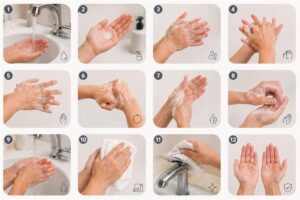
Traveler’s diarrhea is caused primarily by enterotoxigenic E. coli (ETEC) and other enteric pathogens through contaminated food and water. The standard guidance for higher-risk destinations: drink only bottled, boiled, or properly treated water; avoid ice in drinks (which may be made from tap water); eat fully cooked foods served hot; avoid raw vegetables and salads that may have been washed in tap water; peel your own fruit; avoid unpasteurized dairy. Hand washing with soap before eating is essential — particularly important when sanitation infrastructure may be less reliable than at home. If hand washing isn’t available, 60%+ alcohol hand sanitizer is a reasonable interim measure for most (though not all) pathogens.
Skin, sun, and adapting to new climates
Skin care adjustments for travel
Changing climate during travel — particularly shifts in humidity and UV intensity — requires adjustments to skin care. Traveling to more humid climates: lighter moisturizers, potentially double-cleansing to remove sweat and sunscreen thoroughly. Traveling to dry climates or high altitudes (where UV exposure is significantly higher): heavier moisturizers with occlusive components, increased SPF (UV exposure increases by approximately 4% per 300m of altitude), and more frequent sunscreen reapplication. High-altitude destinations and tropical locations with intense sun often catch travelers without adequate SPF — packing SPF 50 and reapplying every 2 hours of sun exposure prevents the sunburn that is both immediately painful and accumulates long-term damage.
Managing jet lag and circadian hygiene
Jet lag is circadian disruption caused by rapid travel across time zones. The body’s clock shifts approximately 1 hour per day naturally, meaning a 6-hour time zone change requires roughly 6 days of full adjustment. Strategies that speed adjustment: immediately adopt the local light-dark schedule upon arrival (seek morning light if traveling east, avoid evening light; seek evening light if traveling west); use melatonin (0.5-1mg taken at the target bedtime in the new time zone for 2-3 nights) to signal the new desired sleep time to the circadian system; avoid napping beyond 20 minutes in the new time zone; maintain adequate hydration during the flight.
Conclusion: a small travel hygiene kit goes a long way
A compact travel hygiene kit addressing the highest-impact items covers most travel health needs: hand sanitizer (60%+ alcohol) for moments without soap and water access; antibacterial wipes for high-touch surfaces; saline nasal spray for in-flight use; broad-spectrum SPF 50 sunscreen; a rich travel moisturizer for dry conditions; and any prescription medications relevant to your destination (including traveler’s diarrhea antibiotics if prescribed by a travel medicine specialist).
For travel to higher-risk destinations, a consultation with a travel medicine clinic 4-6 weeks before departure allows time for any recommended vaccinations (some require multiple doses) and provides destination-specific food, water, and medication advice that generic guidance cannot provide. Prevention of travel illness is far more comfortable than treating it once abroad.