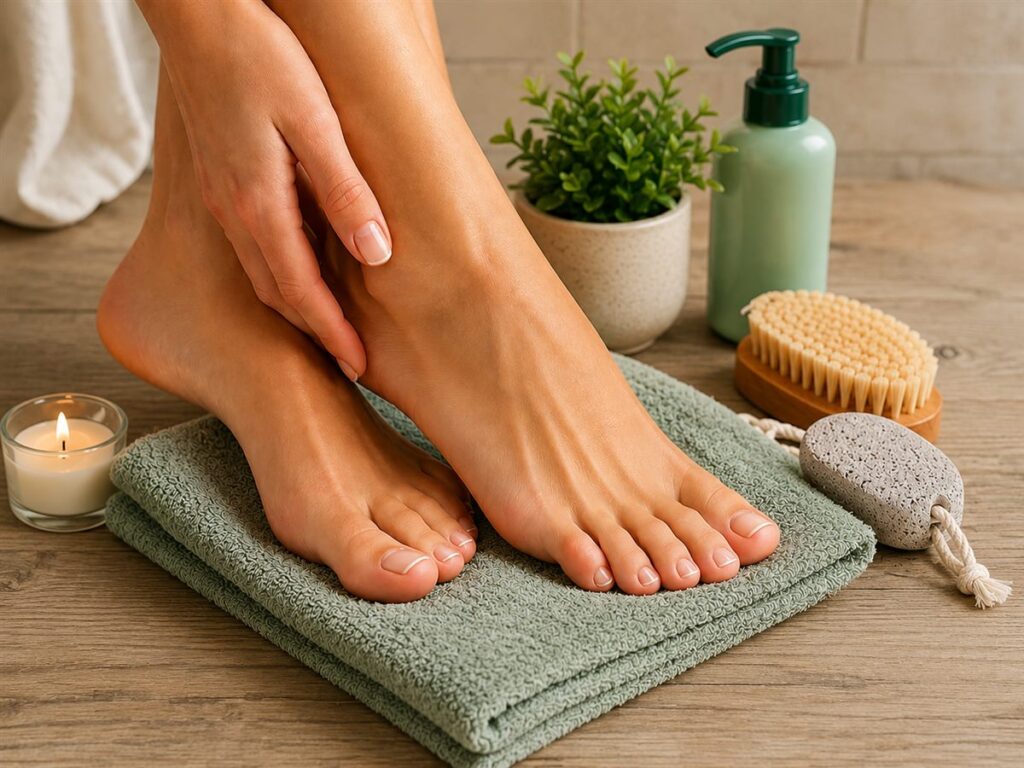
Feet are the most mechanically stressed part of the body — bearing body weight through thousands of steps daily, confined for most hours in shoes that restrict movement, generate heat, and accumulate moisture. Despite this constant mechanical and environmental challenge, feet are probably the most neglected area of personal care in most people’s routines. The common foot problems that develop — calluses, athlete’s foot, ingrown toenails, cracked heels, plantar fasciitis — are largely preventable with modest daily attention, and most are significantly more difficult to treat once established than to prevent.
Daily foot hygiene essentials
Daily washing of the feet (including between the toes, which is where fungal and bacterial moisture accumulates most rapidly) is more important hygienically than washing many other body areas — the enclosed, sweaty environment of shoes creates ideal conditions for microbial growth. Thorough drying between the toes after washing is equally important: moisture retention between the toes is the primary precondition for athlete’s foot (tinea pedis) and other fungal infections. Use a dedicated towel for feet or dry them last to avoid spreading fungi to other areas.
Moisturizing: heels and soles only
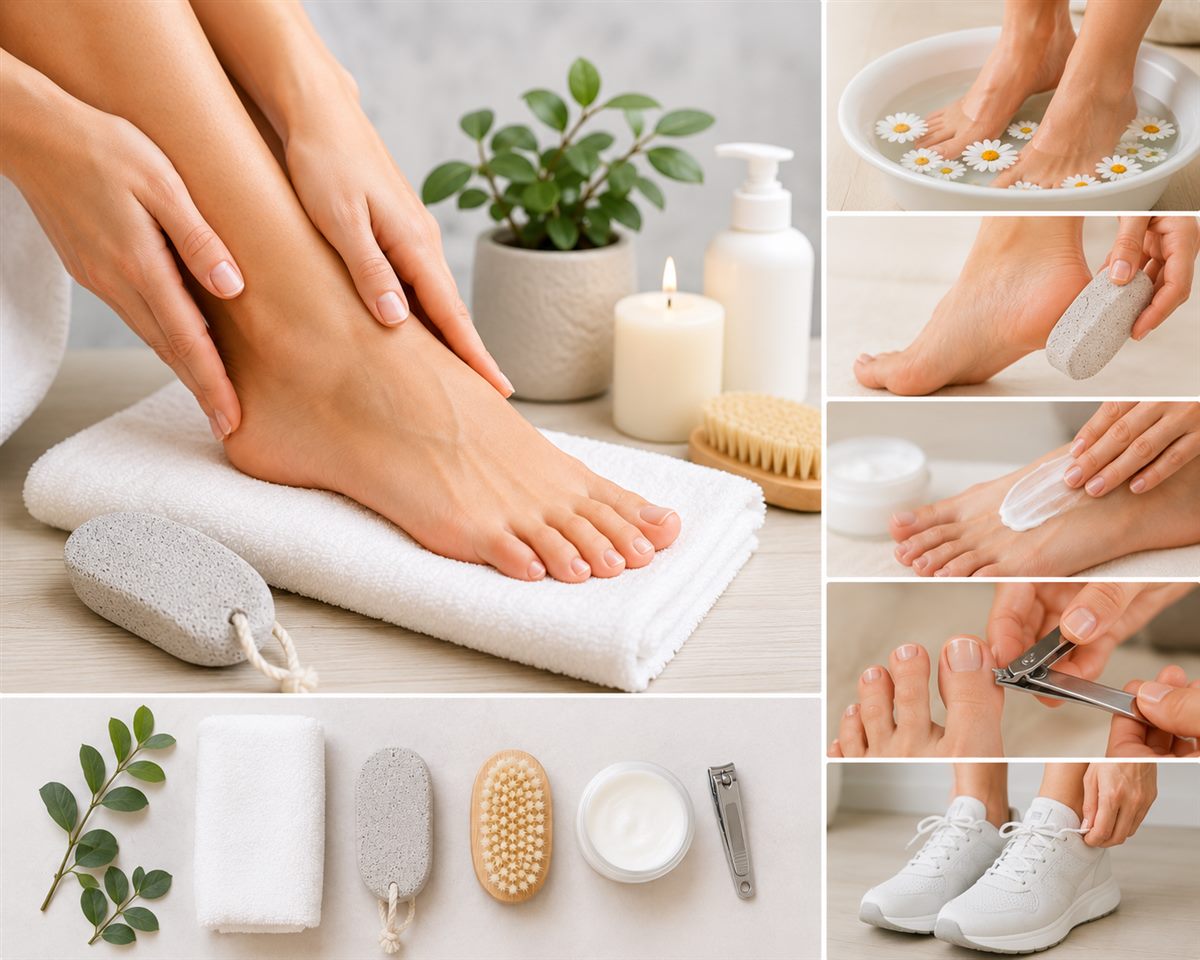
The skin of the heels and soles is the thickest on the body — evolved to withstand pressure — but this thickness makes it prone to cracking when it becomes dry. Cracked heels are not just aesthetic; deep cracks (heel fissures) are painful and can become infected. Apply a urea-containing foot cream (10-25% urea is the most effective ingredient for thickened skin — it is both a humectant and a keratolytic that softens hardened skin) or shea butter to heels and soles after bathing. Do not moisturize between the toes — the additional moisture promotes fungal growth in an area that is already prone to it.
Footwear, calluses, and common problems
Footwear and foot health
The shoes you wear are the primary determinant of your feet’s long-term health. Shoes with adequate width (no toe compression), sufficient toe box height (toes should not be pressed against the top), arch support appropriate for your foot type, and breathable materials dramatically reduce the development of calluses, bunions, corns, and deformities. Rotate shoes to allow them to dry fully between wears — wearing the same pair daily without airing them creates continuously moist conditions. Change socks daily (more frequently if sweating heavily) and choose moisture-wicking natural or technical fabrics over pure cotton for exercise socks, as cotton retains moisture.
Calluses: when to treat and when to leave
Calluses are the skin’s adaptive response to repeated friction or pressure — a thickening of the stratum corneum as protection. Moderate calluses on weight-bearing areas are functional and do not need aggressive treatment. Thick calluses that crack, cause pain, or interfere with movement can be gradually reduced by soaking in warm water for 10-15 minutes and gently filing with a pumice stone or foot file — never cut or aggressively pare calluses at home, particularly if you have diabetes or circulation problems. For significant calluses, corns, or persistent foot pain, a podiatrist is the appropriate professional.
Conclusion: five minutes a day protects your foundation
A consistent daily foot care routine — thorough washing and drying (especially between toes), regular moisturizing of heels and soles, correct toenail trimming, and appropriate footwear — prevents the vast majority of common foot problems. Given how central comfortable, functional feet are to quality of daily life and physical activity, the return on this small daily investment is extremely high.
People with diabetes should pay particular attention to foot hygiene and daily inspection — diabetic neuropathy reduces sensation, making undetected wounds a serious risk. A podiatrist check-up as part of regular diabetes management is strongly recommended, and any foot wound, ulceration, or infection in a diabetic person warrants prompt medical attention.