Oral health is not cosmetic — it is directly linked to systemic health in ways that go well beyond the mouth. Poor oral hygiene is associated with increased risk of cardiovascular disease (bacteria from periodontal disease enter the bloodstream and contribute to arterial inflammation), type 2 diabetes (a bidirectional relationship exists between gum disease and blood sugar control), adverse pregnancy outcomes, and respiratory infections. The mouth is an entry point to the body; its microbiome and inflammatory state affect the rest of the system in meaningful ways.
Understanding the mechanisms behind oral disease — plaque, acid, gum inflammation — makes oral hygiene a rational practice rather than a learned routine, and that understanding dramatically improves compliance and technique.
The plaque-acid-decay cycle
Tooth decay and gum disease both start with dental plaque — the biofilm of bacteria that forms on tooth surfaces continuously. After carbohydrate consumption, plaque bacteria produce acid that demineralizes tooth enamel (the beginning of cavity formation). If plaque is not regularly disrupted by brushing and flossing, it hardens into tartar (calculus) within 24-72 hours — a mineralized form that cannot be removed by brushing and requires professional scaling. Tartar is the primary driver of gingivitis (gum inflammation) and, if untreated, periodontitis (destruction of the bone and tissue supporting teeth).
Brushing: technique matters more than duration alone
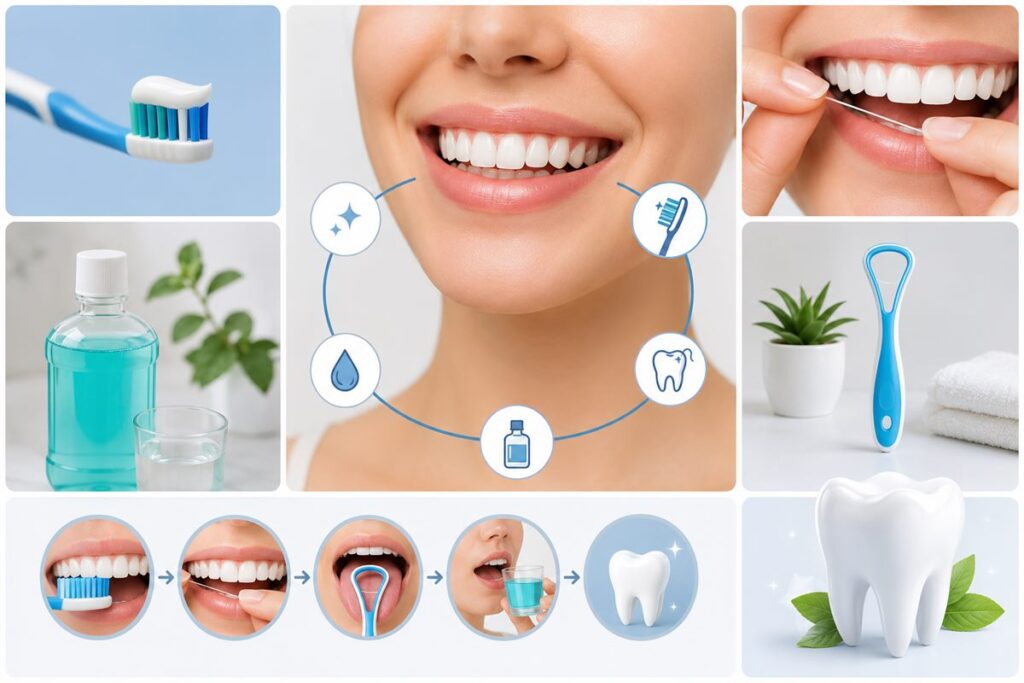
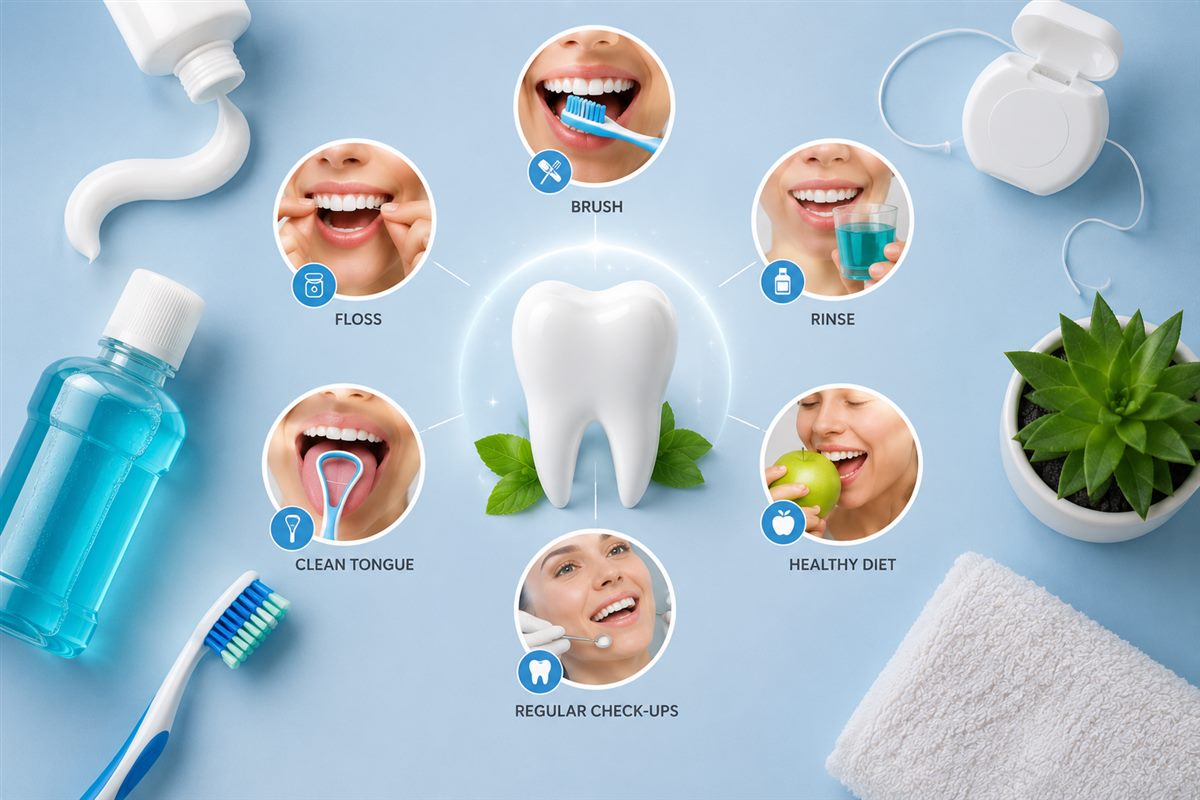
The recommended minimum is 2 minutes, twice daily (morning and before bed). But technique matters as much as time: hold the brush at a 45-degree angle to the gumline (where plaque accumulation is highest), use gentle circular or small back-and-forth strokes, and ensure all surfaces are covered (outer, inner, and chewing surfaces of each tooth, plus the tongue). Electric toothbrushes with oscillating-rotating heads consistently outperform manual brushing in plaque removal studies, particularly at the gumline. Use a soft-bristled brush — medium and hard bristles cause gum recession and enamel abrasion over time. Replace the brush or head every 3 months.
Flossing, mouthwash, and complete care
Flossing: the non-negotiable gap-cleaner
The toothbrush cannot reach the contact surfaces between teeth — the spaces where approximately 35% of the tooth surface lives. Interproximal (between-teeth) surfaces are where cavities and gum disease frequently begin precisely because they are the most neglected. Flossing once daily removes plaque from these surfaces before it can mineralize. Technique: use 15-18 inches of floss, wrap around middle fingers and use thumbs and forefingers to guide — curve the floss into a C-shape around each tooth and slide it gently under the gumline. Floss picks and water flossers are acceptable alternatives for people who find traditional flossing difficult; water flossers (oral irrigators) are particularly useful for orthodontic appliances, bridges, or implants.
Fluoride: the most important active ingredient
Fluoride toothpaste is the single most evidence-supported cavity prevention measure in dentistry. Fluoride incorporates into tooth enamel during remineralization, making the new enamel more resistant to acid attack than the original. It also inhibits plaque bacteria’s ability to produce acid. Adults should use toothpaste with at least 1000ppm fluoride (most standard toothpastes); high-caries-risk individuals may benefit from 1450ppm formulations. After brushing, spit but don’t rinse with water — leaving a small amount of fluoride toothpaste in contact with the teeth for longer after brushing has been shown to improve cavity prevention outcomes.
Mouthwash: supplementary, not a substitute
Antiseptic mouthwash (containing chlorhexidine, cetylpyridinium chloride, or essential oils) can reduce plaque bacteria counts and help with gingivitis management — but mouthwash does not remove plaque mechanically and is genuinely supplementary to brushing and flossing, not a replacement for either. Fluoride mouthwash provides an additional fluoride application, particularly useful for high-caries-risk individuals. Use mouthwash at a different time than brushing (using it immediately after brushing rinses away the fluoride you’ve just applied).
Conclusion: preventive oral care is vastly cheaper than restorative care
The dental treatments required to address untreated gum disease and tooth decay are expensive, uncomfortable, and time-consuming in ways that daily brushing and flossing are not. A five-minute daily oral hygiene routine — brushing twice, flossing once, using fluoride toothpaste correctly — represents an enormous return on investment compared to the alternative.
Regular dental check-ups (twice yearly for most people, or as recommended by your dentist) catch problems before they become expensive and allow professional tartar removal that home care cannot achieve. Oral health, like most preventive health, benefits most from consistency over time and suffers most from the false economy of neglect.