Hand washing is one of the most evidence-backed public health interventions in existence. The CDC estimates that proper hand washing reduces respiratory illnesses (including colds and flu) by 16-21% and gastrointestinal illnesses by approximately 31%. Despite this, studies consistently find that a significant portion of people don’t wash their hands when they should, and that many who do wash don’t do it long enough to be effective. The gap between the knowledge that hand washing matters and actually doing it correctly is one of the most consequential hygiene gaps in daily life.
The mechanism: why soap works
Soap does not kill most pathogens — it removes them. Soap molecules have a hydrophilic (water-attracting) end and a hydrophobic (fat-attracting) end. The hydrophobic ends bind to the fatty membranes of bacteria and viruses (including the lipid envelope of coronaviruses and influenza viruses), and the physical action of rubbing and rinsing lifts them away from the skin’s surface. Plain soap is as effective as antibacterial soap for this purpose in normal circumstances — the FDA concluded in 2016 that antibacterial soaps are no more effective than regular soap for preventing illness in the community setting.

The 20-second rule
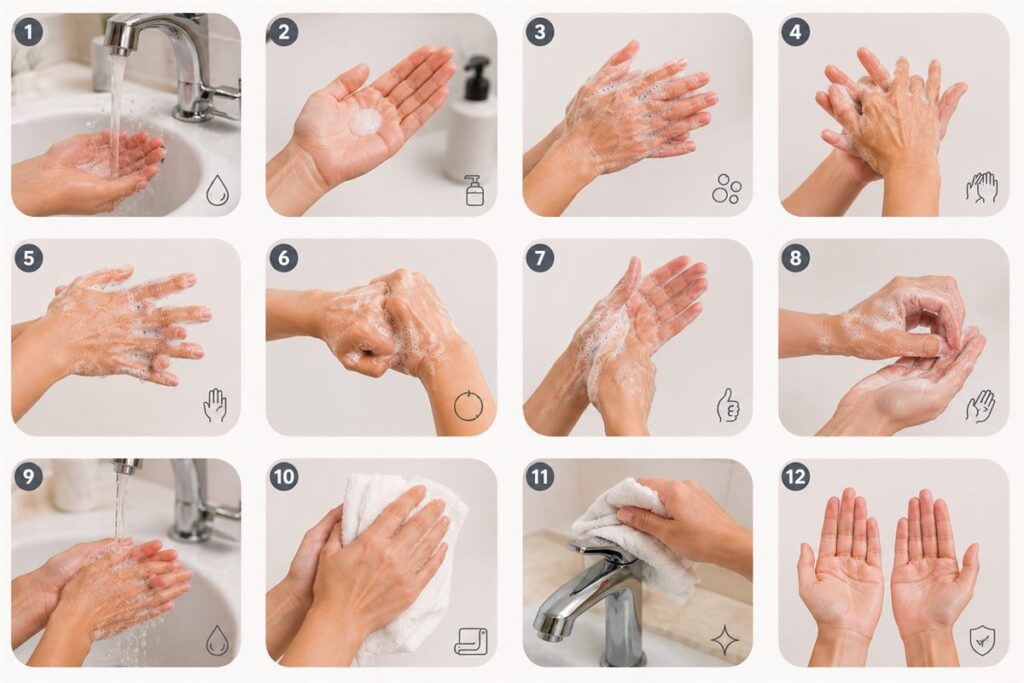
Duration is the critical variable that most hand-washing misses. The physical removal of pathogens requires at least 20 seconds of lathering and friction — this is roughly the time it takes to sing «Happy Birthday» twice. Studies using glow-in-the-dark simulated contamination show that most people who describe their hand washing as thorough don’t reach this threshold. The specific steps matter: wet hands, apply soap, lather all surfaces (backs of hands, between fingers, thumbs, under nails) for 20 seconds, rinse thoroughly, dry with a clean towel.
When to wash your hands
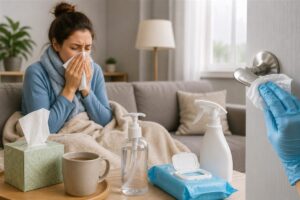
The highest-impact moments for hand washing (when transmission risk is highest): before preparing or eating food; after using the bathroom; after blowing your nose, coughing, or sneezing; after touching a sick person or their immediate surroundings; after handling raw meat or eggs; after contact with animals or animal environments; after handling garbage or visibly dirty objects; after arriving home from public spaces during illness seasons. These moments are where hand washing meaningfully reduces infection risk — not every hour of the day.
Hand sanitizer: effective but not equivalent
Alcohol-based hand sanitizers (at least 60% alcohol) are highly effective against most bacteria and many viruses — and are genuinely useful when soap and water aren’t available. However, they are not effective against some important pathogens (Clostridioides difficile spores, norovirus, and some other non-enveloped viruses require physical removal rather than chemical disruption), and they don’t remove physical contaminants (dirt, chemicals, metals). When hands are visibly dirty or after handling potential C. diff environments (hospitals, elderly care), soap and water is necessary rather than optional.
Conclusion: simple, consequential, and widely underperformed
Hand washing’s effectiveness is not in question — the challenge is consistently doing it correctly at the right moments. The 20-second minimum, the coverage of all hand surfaces, and knowing the highest-priority moments (food, bathroom, illness exposure) are the three variables that determine whether hand washing actually delivers its documented benefits.
For people with dry or sensitive hands who find frequent washing irritating, applying a fragrance-free moisturizing hand cream after washing significantly reduces the dryness that makes people less likely to wash frequently. Taking care of the skin on your hands is compatible with good hand hygiene — they reinforce rather than conflict with each other.