
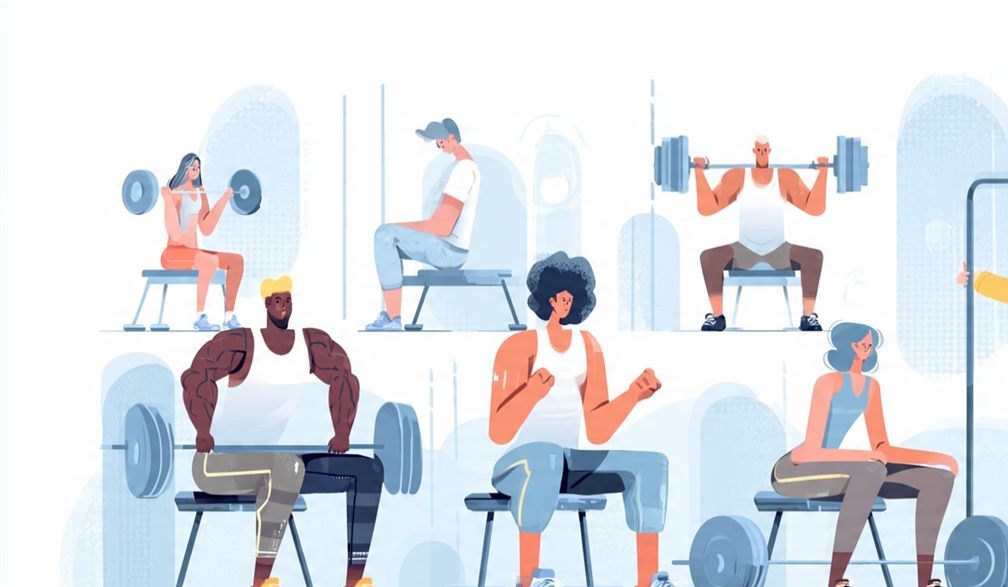
Strength training is frequently associated with bodybuilders and elite athletes, which has caused many people who could benefit enormously from it to treat it as optional or not for them. The evidence argues strongly otherwise. Resistance training is consistently associated with reduced all-cause mortality, improved insulin sensitivity, reduced risk of type 2 diabetes and cardiovascular disease, preservation of muscle mass with aging (sarcopenia prevention), improved bone density (osteoporosis prevention), better cognitive function, and improved mental health outcomes. It is, along with aerobic exercise, one of the most evidence-supported lifestyle interventions available — and it does not require becoming a competitive athlete or spending hours in a gym.
Why strength training matters beyond aesthetics
Muscle mass is metabolically significant — skeletal muscle is the largest site of glucose disposal in the body, and its loss with aging (approximately 3-8% per decade after 30, accelerating after 60) drives much of the metabolic decline and functional limitation associated with getting older. Maintaining or building muscle mass throughout adult life substantially reduces the risk of metabolic syndrome, type 2 diabetes, mobility limitation, and fall-related injury in older age. From a longevity perspective, muscle mass and grip strength are among the most consistent predictors of healthspan and lifespan in epidemiological studies — more predictive than BMI or cardiovascular risk factors alone. The WHO recommendation of muscle-strengthening exercise on 2+ days per week for all adults reflects this evidence.

The fundamental movements: learning the patterns
All effective strength programs are built around a small set of fundamental movement patterns that together train every major muscle group. Learning these movement patterns correctly before adding significant load prevents injury and builds a foundation for long-term progress: Hip hinge: bending at the hips with a neutral spine, loading the posterior chain (glutes, hamstrings, lower back). Movement: deadlift, Romanian deadlift, kettlebell swing. Squat: knee and hip flexion in the vertical plane. Movement: goblet squat, barbell back squat, front squat. Horizontal push: pushing away from the body horizontally. Movement: push-up, bench press, dumbbell press. Vertical push: pressing overhead. Movement: overhead press, pike push-up. Horizontal pull: pulling toward the body horizontally. Movement: dumbbell row, seated row, cable row. Vertical pull: pulling the body upward. Movement: assisted pull-up, lat pulldown, band pull-down.
Designing a beginner strength program
Sets, reps, and frequency
For beginners, the evidence supports full-body training 2-3 days per week rather than body-part splits (training one muscle group per session). Full-body training frequency produces faster strength gains in beginners by stimulating each muscle group more often. A practical beginner program: 2-3 full-body sessions per week, with at least one rest day between sessions. Each session: 2-3 sets of 8-12 repetitions per exercise, with 4-6 exercises covering the fundamental movement patterns. Rest 60-90 seconds between sets. The goal in the first 4-8 weeks is learning movement patterns and building basic work capacity — not maximizing load. Progressive overload applies: add small amounts of weight (2.5-5kg) when you can complete all reps with good form in your current sets.
Bodyweight vs. free weights vs. machines
All three modalities produce strength gains — the best tool is the one you’ll use consistently and learn safely. Bodyweight training (push-ups, squats, lunges, rows using a table or rings) requires zero equipment, is safe for beginners to learn independently, and provides a good starting stimulus. Its limitation: progressive overload requires exercise progression (harder variations) rather than simply adding weight, which can be less intuitive. Machines guide movement and reduce injury risk from poor form — well-suited for beginners who don’t have coaching available. They train muscles effectively but may develop coordination and stability less than free weights. Free weights (barbells, dumbbells, kettlebells) are the most versatile and most commonly used in evidence-based strength programs. They require the most coaching for safe use, particularly the barbell squat and deadlift.
Conclusion: learn the movements, start light, progress consistently
The beginner strength training prescription: learn the six fundamental movement patterns (hinge, squat, push, press, pull horizontal, pull vertical); train full-body 2-3 times per week; start with conservative loads that allow perfect form; add small amounts of weight when current sessions are consistently manageable; eat adequate protein (1.2-1.6g/kg/day); and be patient — visible strength gains take 8-12 weeks, and significant body composition changes take 6-12 months of consistent effort.
The investment is worthwhile by almost any health metric. Strength training is not vanity — it is one of the most effective things an adult can do for metabolic health, bone density, cognitive function, and long-term quality of life. The earlier in adult life it becomes a consistent habit, the greater the compounding benefit.


