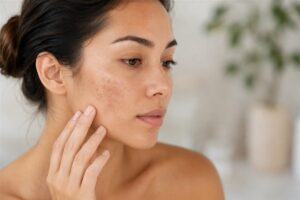

For decades, the conventional dermatological position was that diet doesn’t affect skin — a position that reflected the limitations of early research rather than clinical reality. The evidence since then has shifted considerably. We now know that what you eat has measurable effects on sebum production, inflammatory status, collagen integrity, hydration, and the progression of conditions like acne, eczema, psoriasis, and premature aging.
This does not mean that every person who eats pizza will break out, or that eating more kale will produce dramatic skin changes in a week. Skin reflects long-term nutritional patterns more than individual meals. But understanding the dietary factors that most consistently affect skin health gives you a meaningful lever for improvement that topical products alone cannot provide.
The skin-inflammation connection
Chronic low-grade inflammation is one of the central mechanisms through which diet affects skin. An inflammatory diet — one high in refined carbohydrates, processed foods, trans fats, and excess sugar — maintains a state of systemic inflammation that manifests directly on the skin: triggering or worsening acne, exacerbating eczema and psoriasis, accelerating collagen degradation, and contributing to a dull, reactive complexion.

High-glycemic foods and acne
The most robustly researched dietary-skin connection is between high-glycemic foods and acne. Multiple randomized controlled trials have demonstrated that low-glycemic diets (emphasizing whole grains, vegetables, legumes, and lean proteins over white bread, sugar, and processed carbohydrates) significantly reduce acne lesion counts in acne-prone individuals. The mechanism: high-glycemic foods cause rapid insulin and IGF-1 spikes, which stimulate androgen production — increasing sebum synthesis and follicular hyperkeratinization, the two primary drivers of acne.
Dairy and skin
The relationship between dairy and acne has substantial epidemiological evidence: multiple large observational studies have found associations between dairy consumption (particularly skim milk) and acne. Proposed mechanisms include IGF-1 content in milk (which stimulates the same pathway as high-glycemic foods), hormonal content, and dairy’s naturally high glycemic load when consumed as milk. The evidence is not absolute, and individual responses vary significantly — but for acne-prone individuals, a trial period of dairy elimination (4-8 weeks) is a reasonable experiment.
Nutrients that actively support skin health
Omega-3 fatty acids
Omega-3s (EPA and DHA from oily fish, ALA from flaxseeds, chia seeds, and walnuts) have anti-inflammatory effects throughout the body, including the skin. Research shows that omega-3 supplementation reduces inflammatory acne severity, improves skin hydration and barrier function, and may reduce UV sensitivity. Aim for 2-3 servings of oily fish (salmon, mackerel, sardines, herring) per week, or supplement with 1-2g of EPA+DHA daily.
Collagen-supporting nutrients
Dietary collagen itself is digested into amino acids and doesn’t directly rebuild skin collagen — but the nutrients required for collagen synthesis are absorbed from diet. Vitamin C is the most critical: it’s an essential cofactor for the enzymes that stabilize the collagen triple helix. Without adequate vitamin C, collagen formation is impaired. Zinc (from seafood, red meat, seeds, legumes) supports collagen cross-linking. Proline and glycine (found in bone broth, meat, fish) are the predominant amino acids in collagen. Silicon (from oats, bananas, mineral water) plays a role in collagen cross-linking and bone health.
Antioxidant-rich foods
Dietary antioxidants — vitamin C, vitamin E, carotenoids (beta-carotene, lycopene), and polyphenols — protect skin cells from oxidative stress caused by UV radiation, pollution, and normal metabolic processes. High dietary antioxidant intake is associated in population studies with reduced skin aging, better skin hydration, and lower cancer risk. The «eat the rainbow» principle applies directly: diverse, colorful plant foods provide the broadest-spectrum antioxidant protection.
Conclusion: great skin is built from the inside out
The most effective skincare routine is one that combines what you put on your skin with what you put in your body. A diet centered on whole, minimally processed foods — abundant in colorful vegetables and fruits, healthy fats (especially omega-3s), quality protein, and whole grains — creates a systemic environment that actively supports skin health. Reducing refined carbohydrates, sugar, and ultra-processed foods reduces the chronic inflammation that drives many skin concerns.
These changes don’t produce overnight transformations. But sustained dietary improvements over months show up clearly on the skin — in reduced breakouts, improved hydration, more even tone, and better overall resilience. The skin is not separate from the rest of the body’s systems; it reflects them faithfully.