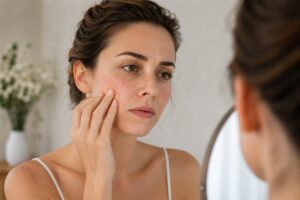

The under-eye area is one of the most requested topics in skincare — and one where the gap between marketing promises and actual evidence is particularly wide. Eye creams are among the most aggressively marketed skincare products, often at significant price premiums, yet many contain essentially the same ingredients as regular moisturizers in smaller packaging. Understanding what actually causes under-eye concerns — and what the evidence shows helps — allows you to make much more intelligent choices.
Under-eye concerns fall into several distinct categories with different causes and different solutions: dark circles (which themselves have multiple distinct causes), puffiness, fine lines and crepiness, and loss of volume. The first step is identifying which type you’re dealing with.
Dark circles: three distinct causes, three different approaches

Vascular dark circles
Vascular dark circles are caused by blood showing through the very thin, translucent skin under the eyes. The periorbital skin is the thinnest on the body, and where blood vessels are close to the surface (particularly in fair or thin-skinned individuals), the bluish-purple tint of deoxygenated blood is visible. These worsen with fatigue (which increases blood pooling), allergies (which cause blood vessel dilation), and with age (as the skin thins further). Topical treatments with limited evidence: vitamin K (may reduce bruising-like appearance), caffeine (temporarily constricts blood vessels). The most effective intervention for true vascular circles is improved sleep quality and managing allergies — and ultimately, cosmetic procedures (laser, injectable fillers) for significant cases.
Pigmented dark circles
Pigmented dark circles are caused by actual melanin deposits in the under-eye area — either from sun exposure, post-inflammatory pigmentation (from rubbing, allergies, or eczema), or genetics (particularly common in South Asian, Middle Eastern, and African skin tones). These tend to appear brown rather than blue-purple. Treatment: the same brightening approach as other hyperpigmentation — vitamin C, niacinamide, alpha arbutin, regular SPF. These take months of consistent effort but can show meaningful improvement.
Structural dark circles
Structural dark circles are caused by a shadow cast by loss of volume in the tear trough — the groove between the lower lid and the cheek. This is largely a feature of aging (as fat pads in the face deflate and descend) and genetics. Topical products cannot meaningfully address this — it is a three-dimensional structural issue. The most effective treatment is injectable HA filler in the tear trough, which fills the groove and eliminates the shadow. This is a medical procedure to discuss with a qualified aesthetician or dermatologist.
Puffiness, fine lines, and eye cream ingredients
Puffiness
Under-eye puffiness is caused by fluid retention in the loose connective tissue around the eyes. Contributing factors: sodium intake (high salt causes water retention), alcohol, allergies, sleep deprivation, and gravitational pooling overnight. Temporary reduction: cold compresses (vasoconstriction), caffeine-containing eye creams (mild decongestant effect), keeping the head elevated during sleep. For persistent structural puffiness caused by herniated orbital fat — visible as constant bags regardless of sleep — topical treatments have essentially no effect; blepharoplasty (eyelid surgery) is the only effective correction.
Fine lines and what works
The skin around the eyes is thinner than the rest of the face and shows aging changes earlier. Fine lines here respond to the same ingredients that work elsewhere: retinoids, peptides, and hyaluronic acid for hydration. Retinol can be used around the eyes but at a lower concentration than the rest of the face — a pea-sized amount on the orbital bone is sufficient. The eye area’s sensitivity means a gentler approach is appropriate. Peptides (palmitoyl pentapeptide, argireline) have some evidence for temporarily reducing the appearance of expression lines through muscle-relaxing or collagen-stimulating effects.
Conclusion: match treatment to cause
The key insight for under-eye care is matching the treatment to the specific cause. A pigment-fighting brightening serum will not help vascular dark circles; an eye cream won’t fix structural volume loss; more sleep is the most effective treatment for fatigue-related puffiness. Most people have a combination of causes, which is why no single product «fixes» under-eye concerns.
For most people, a simple approach is most effective: a gentle, fragrance-free eye cream with hyaluronic acid for hydration, SPF on the under-eye area to prevent further pigmentation, adequate sleep, and low sodium intake for puffiness. For more significant concerns, a consultation with a dermatologist opens up the more effective clinical options that cosmetics cannot replicate.