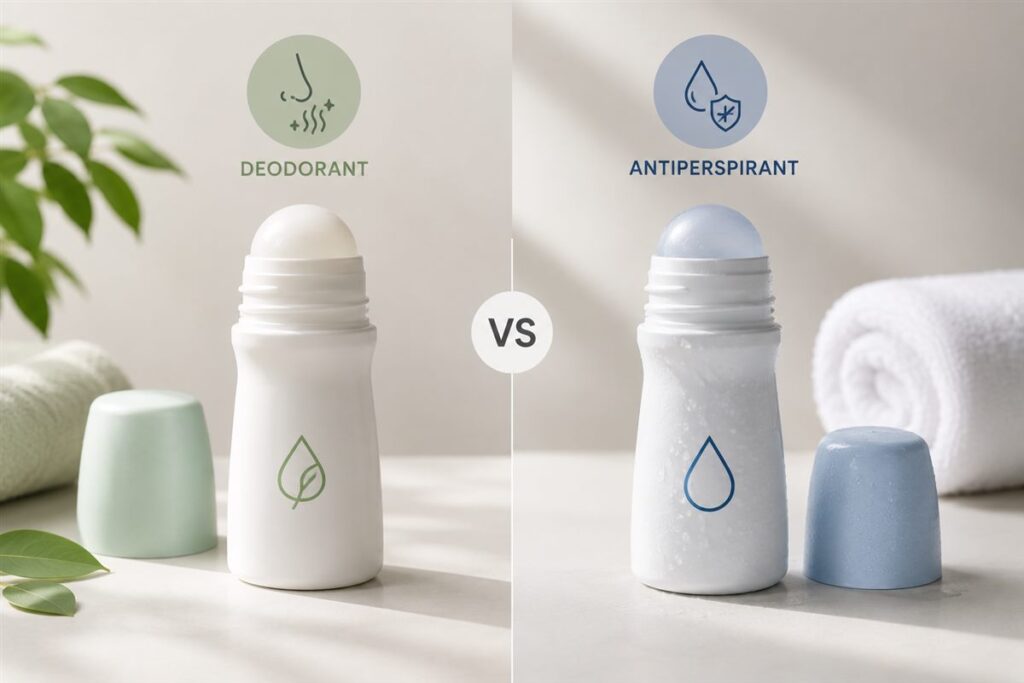
Deodorant and antiperspirant are frequently used interchangeably in conversation — but they are fundamentally different products that work through completely different mechanisms to address different aspects of underarm hygiene. Understanding the distinction matters both for effectiveness (using the wrong product for your concern) and for the various safety questions that have followed antiperspirants for decades. The good news: the science on both products is clear, and the choice between them (or a combination) is genuinely a matter of individual preference and need.
How each product works
Body odor is not caused by sweat itself — sweat from the eccrine glands (the primary sweat glands responsible for temperature regulation) is mostly odorless water and salts. The odor comes from bacteria in the apocrine glands’ output: apocrine sweat contains proteins and lipids that skin bacteria metabolize into the compounds (various acids, thiols, and aldehydes) that produce characteristic body odor. Apocrine glands are concentrated in the armpits, groin, and around nipples and become active at puberty.
Deodorant
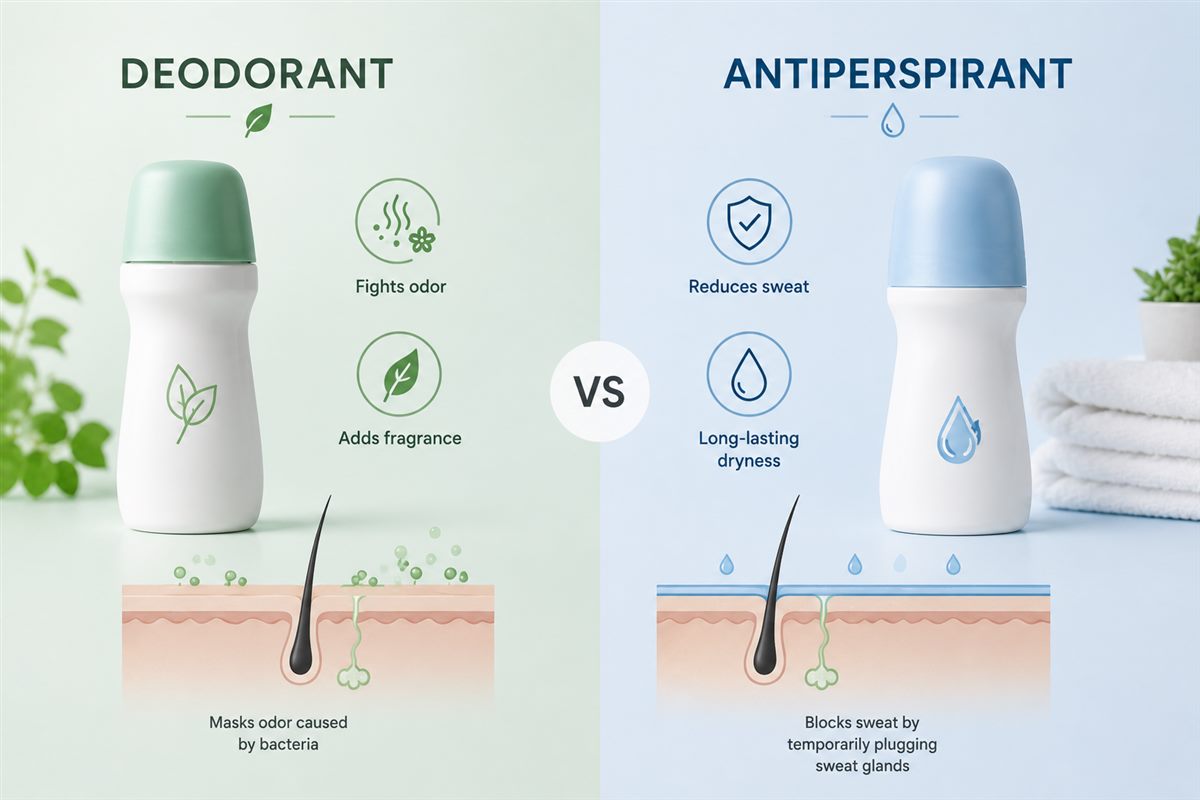
Deodorant addresses odor without affecting sweating. It works primarily through two mechanisms: antimicrobial agents (often alcohol, triclosan alternatives, or zinc salts) that reduce the bacterial population responsible for odor metabolism; and fragrance that masks residual odor. Deodorant does not reduce sweating — you will still perspire normally. It is classified as a cosmetic product (not a drug) in most regulatory systems. Natural deodorants typically rely on baking soda (sodium bicarbonate), magnesium hydroxide, or zinc compounds for antimicrobial effect — these can be effective but baking soda in particular can cause irritation for people with sensitive skin.
Antiperspirant
Antiperspirant reduces sweating itself. The active ingredients — aluminum compounds (aluminum chlorohydrate, aluminum zirconium tetrachlorohydrex, or in prescription formulas, aluminum chloride hexahydrate) — form a temporary gel plug in the sweat duct when they contact moisture, physically blocking eccrine sweat output. Most antiperspirants also contain fragrance or antimicrobial agents, giving them deodorant effect as well. Because they affect a physiological function (sweating), antiperspirants are classified as over-the-counter drugs in the US and many other countries. Application timing matters: applying to completely dry underarms at night (when sweat glands are least active) is significantly more effective than morning application to recently showered skin.
Safety questions and the evidence
Aluminum and cancer: a settled question
Concerns about aluminum in antiperspirants and breast cancer have circulated for decades. The evidence does not support an association. Major reviews by the European Commission Scientific Committee on Consumer Safety, the American Cancer Society, and the National Cancer Institute have consistently concluded there is no demonstrated link between antiperspirant use and breast cancer or Alzheimer’s disease. The aluminum in antiperspirants penetrates the skin in minimal quantities; systemic aluminum exposure from antiperspirant use is negligible compared to dietary aluminum intake.
Who benefits most from each
For people whose primary concern is odor (not wetness): deodorant is sufficient. For people who sweat heavily (hyperhidrosis) or who need wetness protection in professional or physical contexts: antiperspirant is appropriate. For very mild body odor with sensitive skin: natural deodorants or no-fragrance formulas. For clinical hyperhidrosis (excessive sweating that significantly impacts quality of life): prescription-strength aluminum chloride formulas, botulinum toxin injections, or other medical treatments are available and highly effective — a dermatologist referral is appropriate.
Conclusion: the right product depends on what you’re managing
If you’re primarily managing odor, deodorant is sufficient and the simpler choice. If you’re managing both odor and wetness — particularly for long work days, hot climates, or exercise — an antiperspirant-deodorant combination is most effective. Application technique (dry skin, nighttime for antiperspirants) improves performance significantly regardless of product choice.
The natural deodorant market has grown substantially for people preferring aluminum-free options — and while natural deodorants are less effective at controlling wetness, for people without significant sweating concerns they provide adequate odor control. Give any new deodorant (particularly natural formulas) 2-4 weeks for the underarm microbiome to adjust before judging effectiveness.