
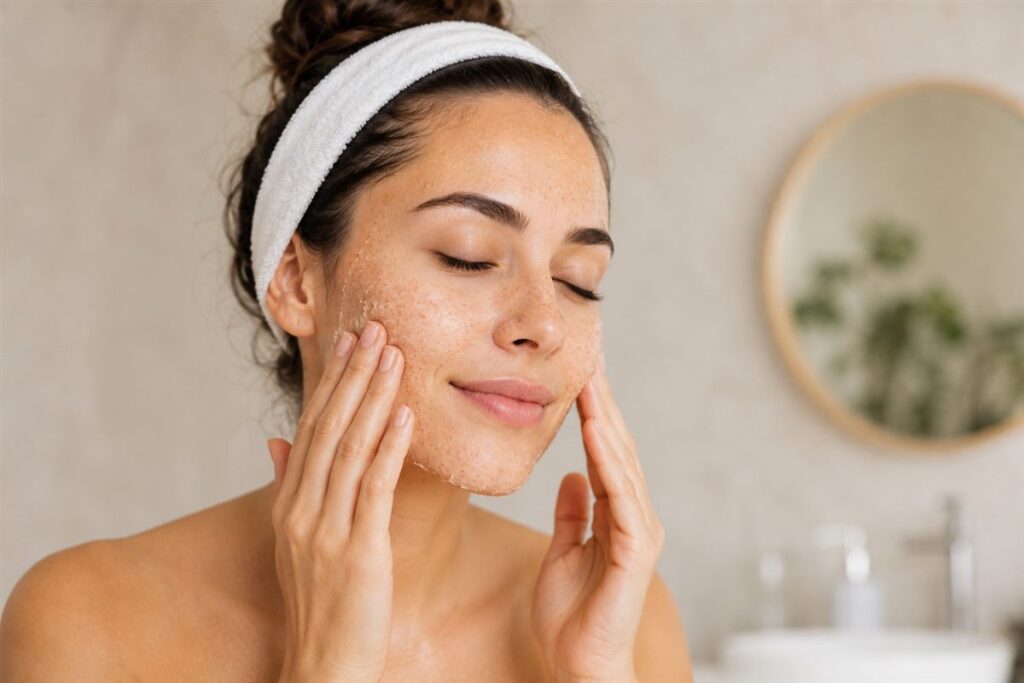
Exfoliation is one of the most transformative skincare steps when done correctly — and one of the most damaging when done incorrectly. Done right, it removes the accumulated layer of dead skin cells that makes skin look dull and feel rough, improves the penetration and effectiveness of other skincare products, reduces the appearance of pores, fades hyperpigmentation more quickly, and reveals the fresher, brighter skin beneath. Done too aggressively or too frequently, it strips the skin barrier, causes micro-tears, increases sensitivity, and triggers the reactive spiral of irritation and overcompensation that makes everything worse.
The key is understanding the two categories of exfoliation — physical and chemical — and matching your approach to your skin type, concerns, and tolerance.
Physical vs. chemical exfoliation
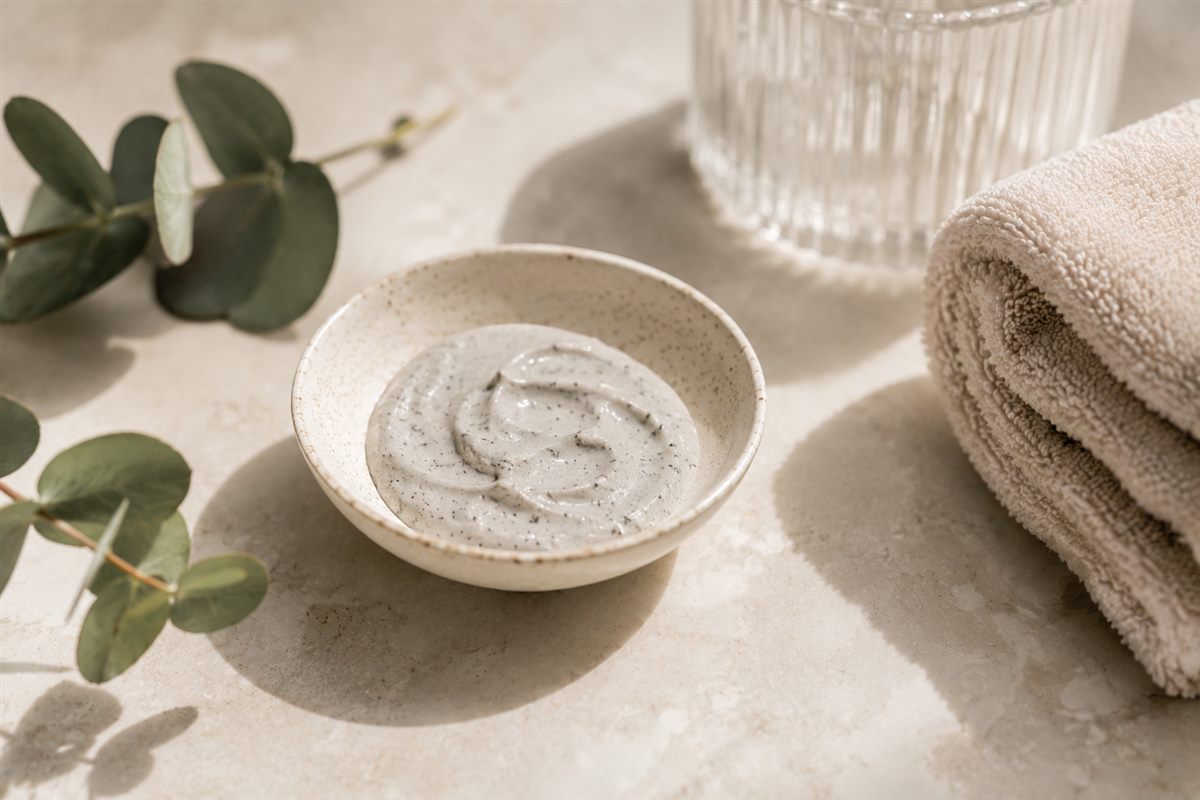
Physical exfoliation: proceed with caution
Physical exfoliation uses abrasive particles or tools to manually remove dead skin cells. This includes sugar scrubs, salt scrubs, facial scrubs with particles, cleansing brushes (like Clarisonic), konjac sponges, and washcloths. The appeal is immediate — skin feels smoother right away. The problem is that physical exfoliants are difficult to control: pressure is uneven, particles can create micro-tears in the skin, and scrubbing motion can spread bacteria. For most facial skin types, coarse physical exfoliants are no longer recommended by dermatologists — the risk of irritation and barrier disruption outweighs the benefits.
Exceptions: very fine, smooth particles (finely milled rice powder, round jojoba beads) with minimal friction are less damaging. A soft washcloth used gently is an acceptable light physical exfoliant for most skin types. For the body, where skin is thicker and more resilient, physical exfoliants are generally more appropriate.
Chemical exfoliation: the preferred approach
Chemical exfoliants use acids or enzymes to dissolve the bonds holding dead skin cells together, allowing them to shed naturally. They are generally more controllable, more effective at lower concentrations, and less damaging to the skin barrier than physical scrubbing. The main categories are alpha hydroxy acids (AHAs), beta hydroxy acids (BHAs), and polyhydroxy acids (PHAs).
AHAs (glycolic acid, lactic acid, mandelic acid) work primarily on the surface, dissolving dead cell buildup to improve texture, radiance, and hyperpigmentation. Glycolic acid (smallest molecule, deepest penetration) is most potent; lactic acid is gentler and adds hydration; mandelic acid (largest molecule) is most suitable for dark or sensitive skin. BHAs (salicylic acid) are oil-soluble and penetrate into pores, making them ideal for oily and acne-prone skin. PHAs (gluconolactone, lactobionic acid) are larger molecules with very shallow penetration — gentle enough for rosacea, eczema-prone, and sensitive skin.
How often to exfoliate by skin type
Frequency matters as much as product choice. Over-exfoliation is one of the most common skincare mistakes — it causes immediate barrier compromise and can trigger long-term sensitivity. General guidelines:
Normal skin: 2-3 times per week with a mild AHA (lactic acid at 5-10%) or gentle BHA. Oily/acne-prone skin: up to daily use of a low-concentration BHA (salicylic acid 0.5-1%) in a cleanser or toner; weekly use of a stronger AHA. Dry/sensitive skin: 1-2 times per week with lactic acid or a PHA; avoid glycolic acid until tolerance is established. Combination skin: BHA on T-zone, AHA or PHA on drier areas, 2-3 times weekly. Never use multiple exfoliants on the same day, and avoid using AHAs/BHAs on the same evening as retinoids (they stack irritation).
Conclusion: exfoliate smarter, not more
The goal of exfoliation is to support the skin’s natural cell turnover process — not to forcibly remove every last dead cell as quickly as possible. The skin sheds its entire outer layer approximately every 4-6 weeks naturally; exfoliation simply accelerates and refines this process. The right frequency is the minimum that produces visible improvement without triggering irritation, dryness, or sensitivity.
If your skin is currently over-exfoliated (signs: constant tightness, redness, burning, sensitivity to previously tolerated products), stop all exfoliation for 2-4 weeks, focus entirely on barrier repair (gentle cleanser, ceramide moisturizer, SPF), and restart with lower frequency and concentration when the barrier has recovered.