
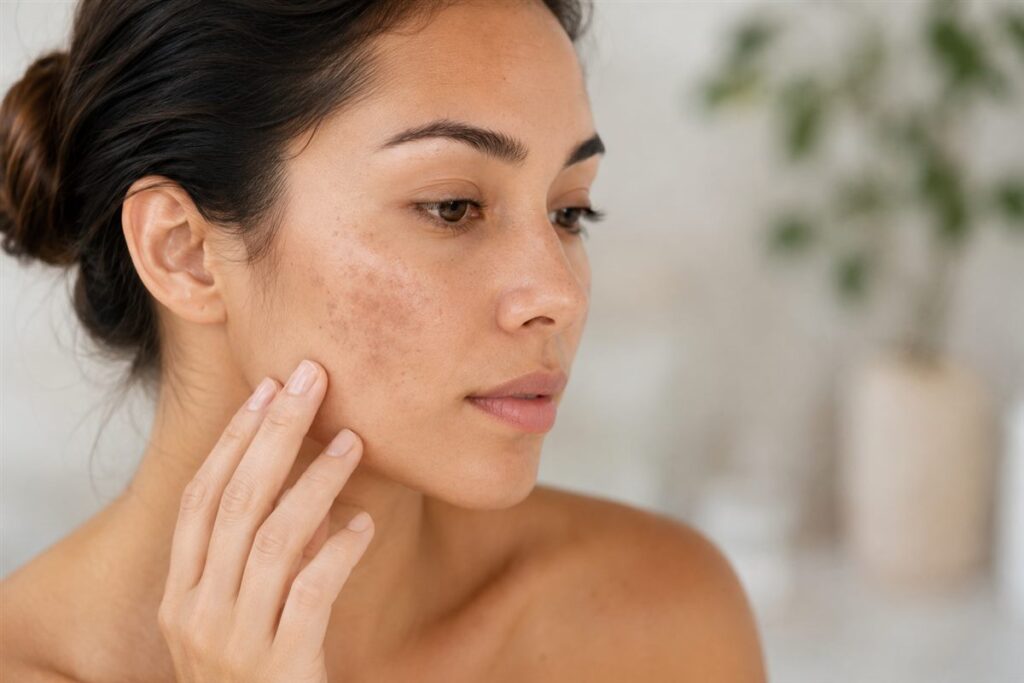
Hyperpigmentation — darkened patches or spots caused by excess melanin production — is one of the most common skin concerns across all skin tones. It can take several forms: post-inflammatory hyperpigmentation (PIH) left after acne, wounds, or inflammation; melasma (triggered by hormonal changes, sun exposure, or both); solar lentigines (sunspots from cumulative UV exposure); and periorbital hyperpigmentation (dark circles with a pigment component). Each type has somewhat different characteristics, timelines, and treatment approaches.
The frustrating reality of hyperpigmentation is that it takes time to develop — months to years of accumulated melanin deposits — and it takes time to fade. There are no overnight solutions. But with the right combination of sun protection (non-negotiable), targeted active ingredients, and patience, significant improvement is achievable for most types of hyperpigmentation.
Understanding how hyperpigmentation forms
Melanin is produced by melanocytes — specialized cells in the basal layer of the epidermis. In normal function, melanin production is regulated and distributed evenly. Hyperpigmentation occurs when melanocytes produce excess melanin in response to triggers: UV radiation (the most universal), inflammation (cytokines from acne or injury stimulate melanocytes), or hormones (estrogen and progesterone stimulate melanocyte activity, which is why melasma is strongly associated with pregnancy and oral contraceptive use).

Why sunscreen is the most important step
Any treatment for hyperpigmentation will fail without rigorous daily sun protection. UV exposure stimulates new melanin production, directly counteracting whatever fading the actives are achieving. This is why dermatologists uniformly insist that SPF 30+ (ideally SPF 50) broad-spectrum sunscreen every morning — regardless of weather or season — is the foundation of any hyperpigmentation protocol. Without it, you are pouring water into a bucket with a hole in it. Indoor-only days still require SPF because UVA penetrates windows.
The most effective depigmenting ingredients
Vitamin C (L-ascorbic acid)
Vitamin C inhibits tyrosinase (the enzyme responsible for melanin synthesis) and also directly reduces existing oxidized melanin. At 10-20% concentration in a stable formulation, it is one of the most effective brightening ingredients with excellent safety data. Results visible from about 8 weeks of consistent daily morning use. Works synergistically with SPF (antioxidant protection amplifies UV protection).
Niacinamide
At 5%, niacinamide reduces the transfer of melanin from melanocytes to surrounding keratinocytes, reducing the visibility of existing pigmentation. It does not inhibit melanin synthesis but prevents its distribution. Well tolerated by sensitive skin and combines well with most other brightening ingredients.
Alpha arbutin and kojic acid
Alpha arbutin (from bearberry) is a tyrosinase inhibitor with strong safety data and good efficacy for epidermal hyperpigmentation. Kojic acid (from fungi, a fermentation byproduct) is another tyrosinase inhibitor with evidence for effectiveness at 1-4% — it can be mildly irritating for some skin types. Both are often combined with vitamin C and niacinamide for a multi-mechanism approach.
AHA exfoliants (glycolic and lactic acids)
Alpha hydroxy acids accelerate the shedding of pigmented surface cells, speeding the fading process. Regular use (2-3x weekly) of well-formulated AHA products significantly enhances the effectiveness of depigmenting actives by removing the existing pigmented cells while the actives work to prevent new pigment formation. Particularly effective for post-inflammatory hyperpigmentation from acne.
Conclusion: a multi-step protocol over months
Effectively treating hyperpigmentation requires a committed multi-step approach: consistent SPF every day (prevent new melanin formation), a combination of depigmenting actives (inhibit and reduce existing melanin), and regular gentle exfoliation (accelerate the removal of pigmented cells). Results require 3-6 months of consistent effort — melasma, in particular, may require 6-12 months and can recur with sun or hormonal triggers.
For persistent or severe hyperpigmentation that doesn’t respond to topical actives, in-office treatments (chemical peels, laser therapy, microneedling) can provide faster and more dramatic results — a dermatologist consultation is well worth it for cases that aren’t improving with a thorough home routine after 3-4 months.