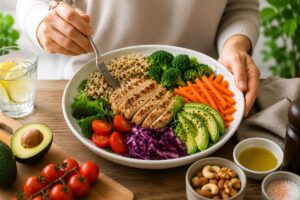
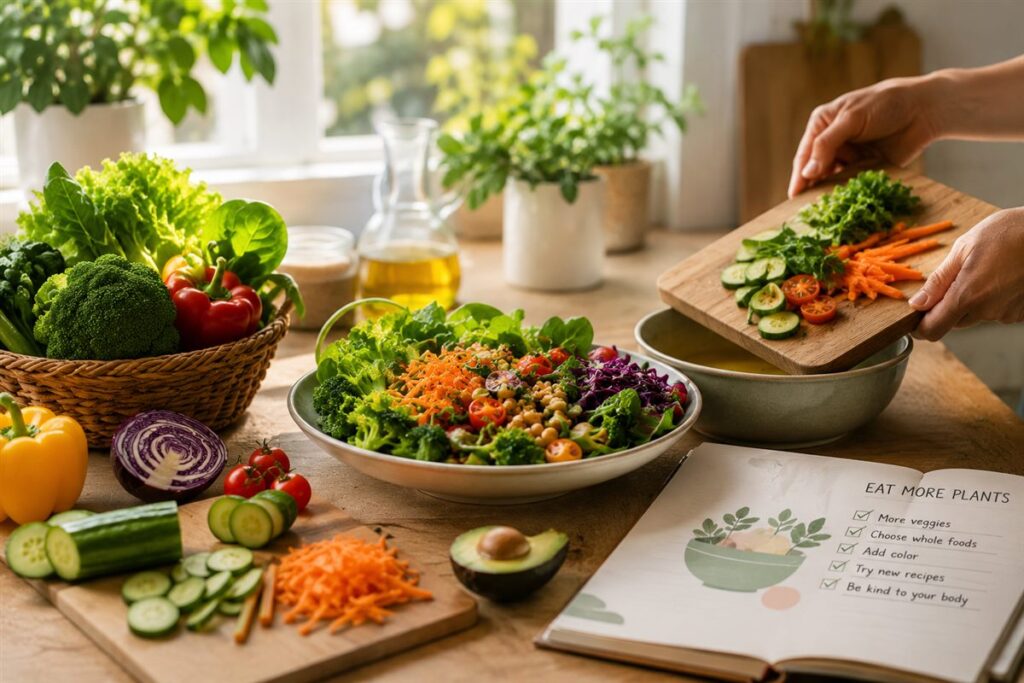
«Plant-based» has become one of the most loaded terms in the nutrition conversation — simultaneously used to describe whole-food vegetarian diets and ultra-processed vegan burgers. The underlying nutritional principle is worth separating from the label: the research consistently shows that diets rich in diverse whole plant foods (vegetables, fruits, legumes, whole grains, nuts, seeds) are associated with better health outcomes than diets where these foods are marginal. This holds whether or not the diet is strictly vegetarian or vegan. The question is not all-or-nothing — it’s directional.
The spectrum from plant-forward to fully plant-based
There is no hard line between eating patterns — rather a continuum from the typical Western diet (animal foods dominating, plant foods minor), through flexitarian (mostly plant foods, occasional animal products), to vegetarian (no meat but dairy and eggs included), to vegan (no animal products). The health benefits are not exclusive to strict veganism — they appear across the spectrum, associated with the proportion of whole plant foods in the diet rather than the complete exclusion of animal products. People eating a whole-food, plant-forward diet with some fish, eggs, and dairy typically show health markers comparable to well-planned vegans — and both show better outcomes than the typical Western omnivore diet.

The ultra-processed vegan trap
One important caveat: the health evidence for plant-based diets is based on whole-food plant diets, not on replacing animal products with ultra-processed vegan alternatives. Vegan burgers, vegan sausages, and vegan cheese products made from refined plant proteins, isolated fats, and extensive additives are ultra-processed foods — a category associated with poor health outcomes regardless of whether they contain animal ingredients. The NOVA classification doesn’t distinguish by animal/plant; it distinguishes by processing level. A diet based heavily on ultra-processed vegan foods is not nutritionally equivalent to a whole-food plant-forward diet, and conflating the two (which food marketing encourages) misrepresents the evidence.
Nutritional planning for plant-forward and vegan diets
Key nutrients to monitor
Shifting toward plant-forward eating is nutritionally straightforward for most people. Going fully vegan requires more attention to specific nutrients: Vitamin B12: found exclusively in animal products — the one nutrient that must be supplemented on a vegan diet without exception. B12 deficiency causes neurological damage. Vitamin D: low in most diets regardless of eating pattern; supplement or optimize sun exposure. Omega-3 (EPA/DHA): plant sources (flaxseed, chia, walnuts) provide ALA, which converts to EPA/DHA at low efficiency. Regular consumption of algae-based omega-3 supplements (the same source fish get their omega-3 from) covers this gap effectively. Iron: plant iron (non-heme) is less bioavailable than heme iron from meat; consuming with vitamin C improves absorption. Zinc: similarly less bioavailable from plants; variety and quantity cover needs. Calcium: well covered by leafy greens (bok choy, kale, broccoli), legumes, fortified plant milks, and tofu made with calcium sulfate.
Getting protein right on a plant-based diet
Adequate protein is achievable on a well-planned plant-based diet but requires intentionality. Legumes (lentils, chickpeas, black beans, edamame, tofu, tempeh) are the foundation of plant protein — they are the nutritionally equivalent replacement for meat in terms of protein density, micronutrient profile, and satiety. Aim for at least 2-3 legume-containing meals per day on a vegan diet to meet protein requirements comfortably. Whole grains, nuts, seeds, and vegetables provide additional protein throughout the day. The «you must combine proteins at every meal» myth is outdated — eating a variety of plant proteins over the course of a day ensures all essential amino acids are provided.
Conclusion: more plants is better — the degree is your choice
The clearest nutritional directive is to eat more diverse whole plant foods as a proportion of the overall diet. Whether this means becoming vegan or simply having legumes three times a week and doubling vegetable servings is a personal choice — both produce meaningful health improvements over the typical Western diet. The all-or-nothing framing of the «vegan vs. omnivore» debate obscures the real takeaway: direction matters more than purity.
For those going fully plant-based, supplement B12 without exception, consider algae-based omega-3, prioritize legumes as the protein cornerstone, and eat diverse whole foods. These fundamentals make plant-based eating both health-supportive and nutritionally complete.