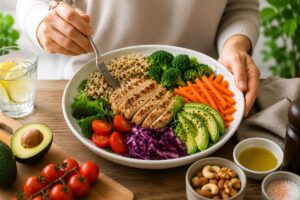
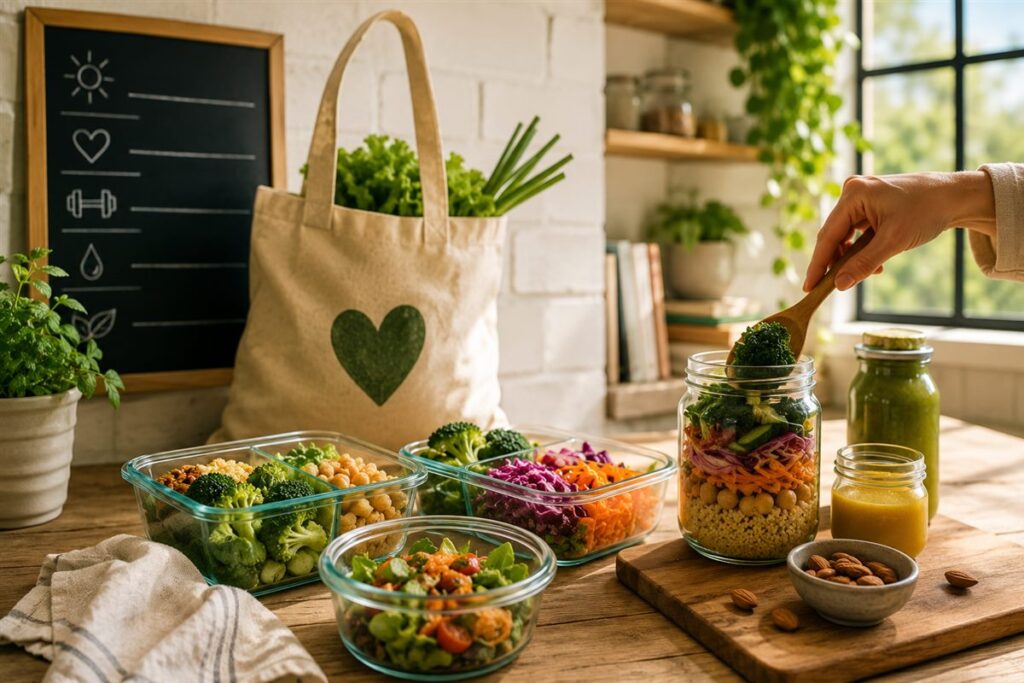
The most consistent predictor of eating well during a busy week is not willpower or motivation — it is what food is already prepared and available. When people come home tired and hungry to an empty fridge, convenience determines the outcome. Meal prep — preparing components or full meals in advance — is essentially a decision-making strategy: you make the good choices once, when you have time and energy, and benefit from those decisions all week without the daily friction of planning and cooking from scratch.
The component vs. full-meal approach
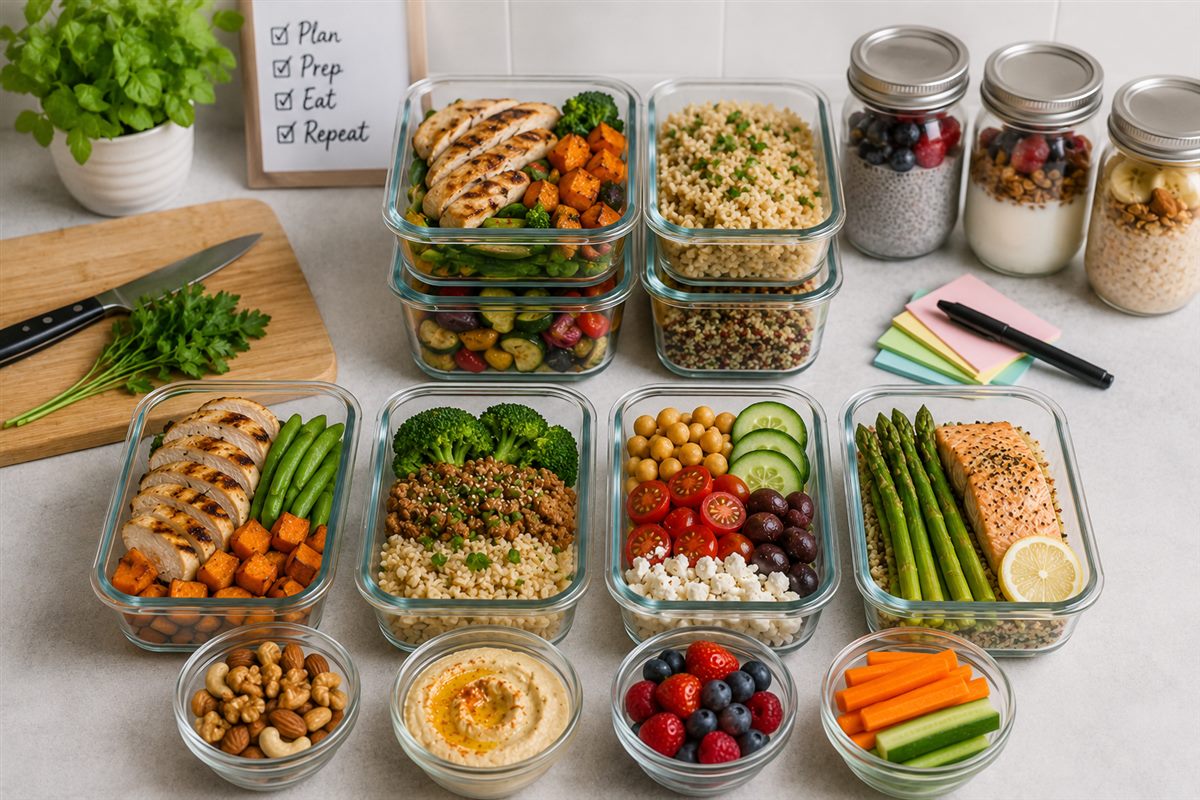
There are two main meal prep philosophies. Full-meal prep means cooking complete dishes (a chicken and vegetable stir-fry, a lentil soup, a grain bowl) and portioning them into containers for specific meals throughout the week. It’s efficient but creates repetition — eating the same lunch four days in a row becomes tedious for most people. Component prep means cooking flexible building blocks that can be mixed and matched into different meals. Cook a batch of grains (rice, quinoa, farro), roast a sheet pan of assorted vegetables, prepare a protein (baked chicken breasts, hard-boiled eggs, a pot of chickpeas), and wash and prep salad greens. These components combine into dozens of variations throughout the week with minimal additional effort.
What to prep for maximum versatility
Grains: a large batch of cooked grains lasts 4-5 days refrigerated and forms the base of bowls, stir-fries, salads, and soups. Brown rice, quinoa, and farro are particularly versatile. Roasted vegetables: a sheet-pan of mixed vegetables (broccoli, sweet potato, bell peppers, zucchini, cherry tomatoes) at 200°C for 25-30 minutes creates a week’s worth of side dishes, bowl toppings, and protein additions. Proteins: baked chicken breasts, a pot of beans or lentils, or a batch of hard-boiled eggs give you fast protein throughout the week. Salad base: washed and dried leafy greens stored in a container with a paper towel (to absorb moisture) stay fresh for 4-5 days. Sauces and dressings: a homemade tahini dressing, lemon-herb vinaigrette, or avocado sauce prepared in a jar transforms the same ingredients into different meals.
Making it practical and sustainable
The two-hour Sunday session
A practical meal prep session takes 1.5-2 hours and produces enough components for 4-5 days of lunches and dinners. The key to efficiency is working in parallel: while grains cook on the stove (largely unattended), roast vegetables in the oven simultaneously, and use that time to wash, prep, and store salad ingredients and prep proteins. The oven and stove do most of the work while you do minimal active cooking. You don’t need to prep every meal — often prepping just lunches (the meal most likely to become unhealthy takeout when unprepared) produces the most significant lifestyle impact.
Food safety and storage
Cooked foods should be cooled to room temperature before refrigerating (to avoid raising the refrigerator temperature) and stored in sealed containers. Most cooked proteins and vegetables are safe for 3-4 days refrigerated. Grains last 4-5 days. Raw salad components last 4-5 days. For longer storage, freeze full meals or individual proteins — most cooked dishes freeze well for 2-3 months. Label containers with contents and date. Avoid prepping more than you’ll realistically eat — food waste defeats the purpose of efficient prep.
Conclusion: prep components, not full plates
The most sustainable meal prep system is not about rigid meal planning but about ensuring that the raw material for quick, healthy meals is always available in the fridge. Cook a grain, roast vegetables, prep a protein — these three components, prepared once a week, turn every meal assembly into a five-minute task rather than a 45-minute commitment.
The goal is to make good eating easier than bad eating. When the healthy option requires less effort than ordering delivery, healthy eating becomes the default — not because of discipline, but because of good system design.