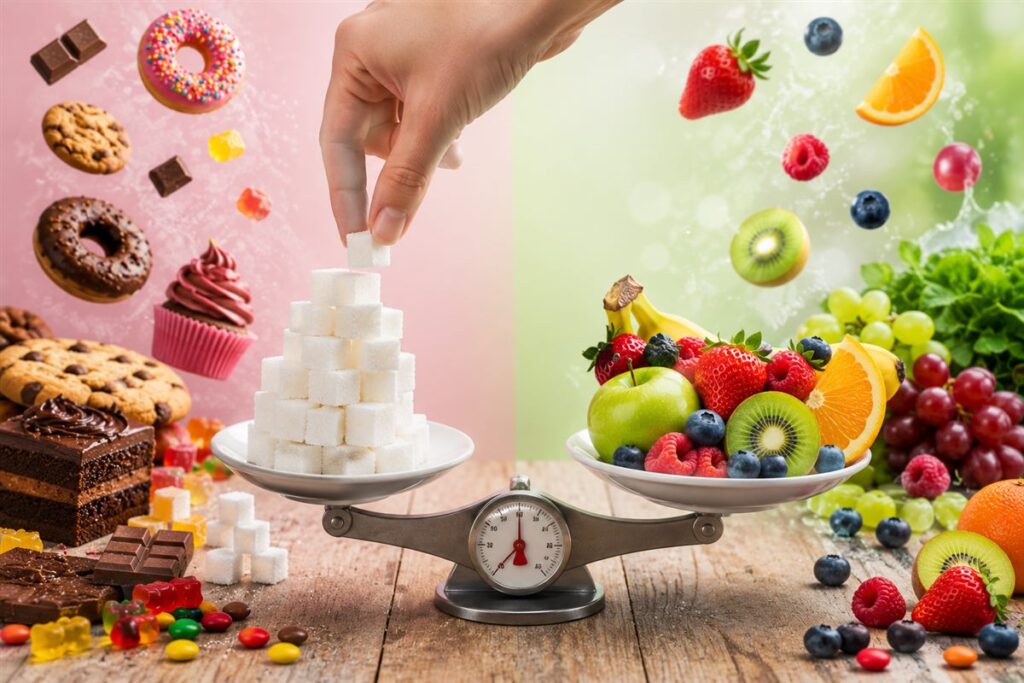
Sugar has become one of the most polarizing topics in nutrition — simultaneously positioned as the root cause of nearly all chronic disease and as an innocent pleasure unfairly demonized. The evidence-based position sits between these extremes: added sugar consumption above certain thresholds is associated with significant health risks (type 2 diabetes, cardiovascular disease, dental caries, weight gain, fatty liver), while naturally occurring sugar in whole foods comes packaged with fiber and nutrients that fundamentally change its metabolic effect. The distinction between these contexts is critical.
Added sugar vs. naturally occurring sugar
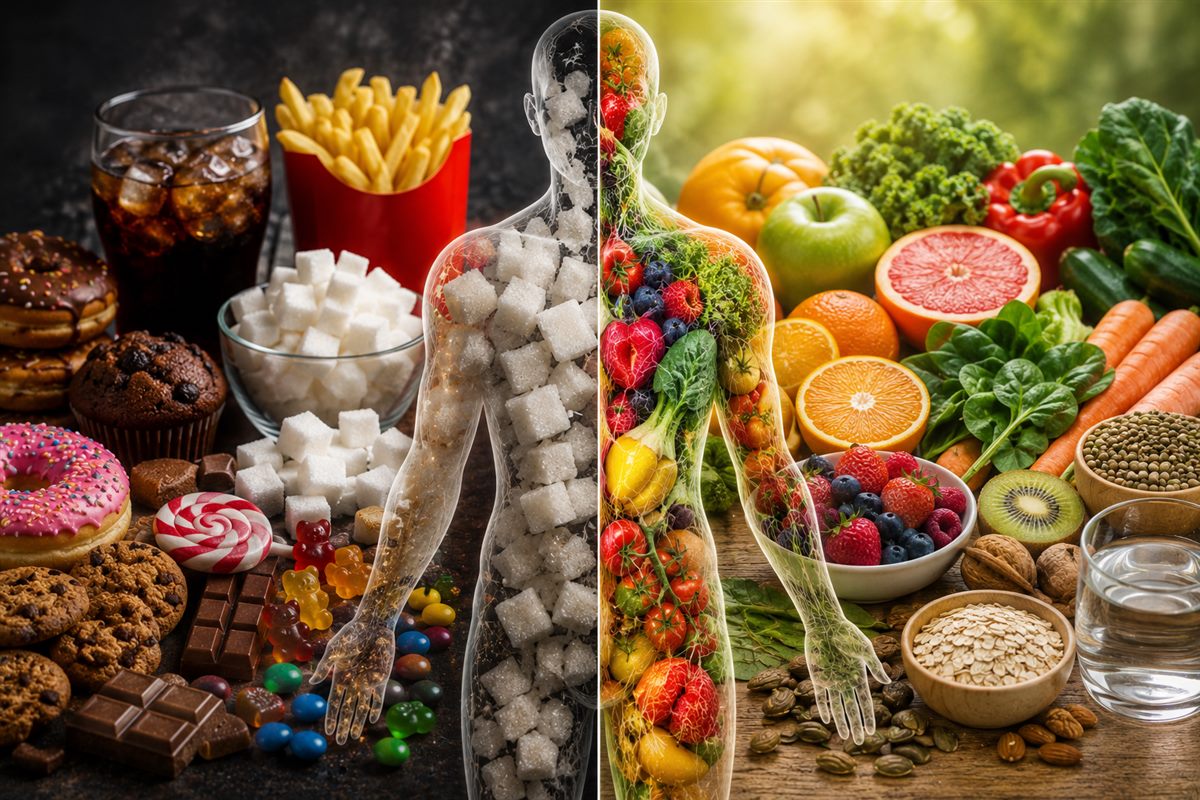
Added sugars are sucrose (table sugar), high-fructose corn syrup, glucose, dextrose, maltose, and other caloric sweeteners added to foods during processing or preparation. Naturally occurring sugars are the lactose in dairy and the fructose and glucose in whole fruits and vegetables. The critical difference: natural sugars in whole foods come with fiber (in fruit), protein and fat (in dairy), and a range of micronutrients. This food matrix slows absorption, reduces the glycemic response, and provides nutritional value alongside the sugar. Fruit consumption is consistently associated in research with health benefits, not harms — despite containing sugar. The concern is specifically with added sugar and the ultra-processed foods that deliver it.
How much added sugar is too much?
The World Health Organization recommends reducing free sugars (added sugars and naturally occurring sugars in honey, syrups, and fruit juices) to less than 10% of total energy intake — and ideally less than 5%. For an average 2,000 calorie diet, 5% is approximately 25g (6 teaspoons) of added sugar per day. The average person in many Western countries consumes 3-4 times this amount. A single 355ml can of regular soft drink contains approximately 39g of added sugar — already over the WHO’s preferred daily maximum. A flavored yogurt, a fruit juice, a muffin, and a sports drink can collectively represent more than 100g of added sugar in a day that may not even feel particularly indulgent.
Where added sugar hides and how to reduce it
The hidden sources
The most significant sources of added sugar in the modern diet are not necessarily obvious sweet foods — they include: sugar-sweetened beverages (the largest single source — soft drinks, energy drinks, fruit juices, sweetened coffees); condiments and sauces (ketchup, barbecue sauce, sweet chili sauce, many salad dressings contain significant added sugar); breakfast cereals; flavored dairy products (flavored yogurts, flavored milks); bread and baked goods; and many «healthy» products marketed as health foods (granola bars, protein bars, dried fruits with added sugar, flavored oat products).
Practical reduction strategies
The highest-impact change is eliminating or dramatically reducing sugar-sweetened beverages — replacing them with water, sparkling water, unsweetened tea or coffee, or plain milk. This single change produces the most significant reduction in added sugar intake for most people with the least disruption to food enjoyment. Secondary: reading ingredient labels on packaged foods for hidden sugar (which appears under many names: sucrose, glucose, fructose, corn syrup, agave, maltodextrin, dextrose); choosing plain versions of dairy products and adding your own fresh fruit; and cooking sauces and condiments from scratch when practical.
Conclusion: reduce added sugar, enjoy natural sugar freely
A sensible approach to sugar: reduce added sugar meaningfully (targeting below 25-50g/day as a realistic goal for most people) by focusing primarily on beverages and packaged/processed foods; and continue to enjoy fruit, dairy, and other whole foods without concern about their naturally occurring sugar content. This approach captures the evidence-supported health benefits of sugar reduction without creating anxiety about eating an apple.
Taste preferences for sweetness are habituated — reducing added sugar intake consistently over 2-4 weeks reduces the sweetness threshold, making less sweet foods taste more satisfying. The palate adapts, making sustained reduction significantly easier over time than the first week suggests.