The «drink 8 glasses of water a day» recommendation is perhaps the most persistently repeated nutrition myth with the least scientific support. The origin of the 8×8 rule (eight 8-ounce glasses per day) is murky — it appears to derive from a 1945 US Food and Nutrition Board recommendation that included water from all dietary sources (food included), not just plain drinking water, and that number was simply misremembered without the caveat. The actual physiology of hydration is considerably more individualized and sensible — your body has a highly refined regulatory system for managing fluid balance, and it communicates its needs clearly if you pay attention.
How the body regulates hydration
The kidneys are extraordinarily efficient at managing fluid balance. When intake is high, kidneys produce dilute urine and excrete excess water. When intake is low, they concentrate urine to retain fluid. Thirst is regulated by osmoreceptors in the hypothalamus that detect rising plasma osmolality (blood becoming more concentrated) with high sensitivity — thirst kicks in at approximately 1-2% dehydration, well before performance-impairing levels. In healthy adults, drinking when thirsty and stopping when satisfied is an effective hydration strategy. The kidneys, not a specific daily volume, are what protect against dehydration.
Individual variation and influencing factors
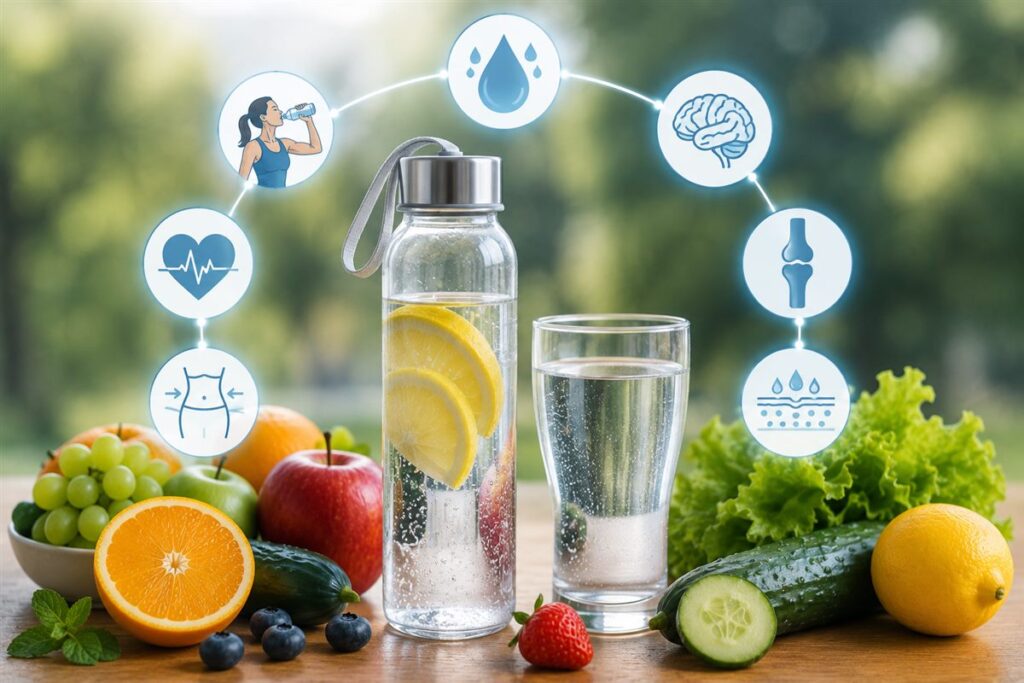
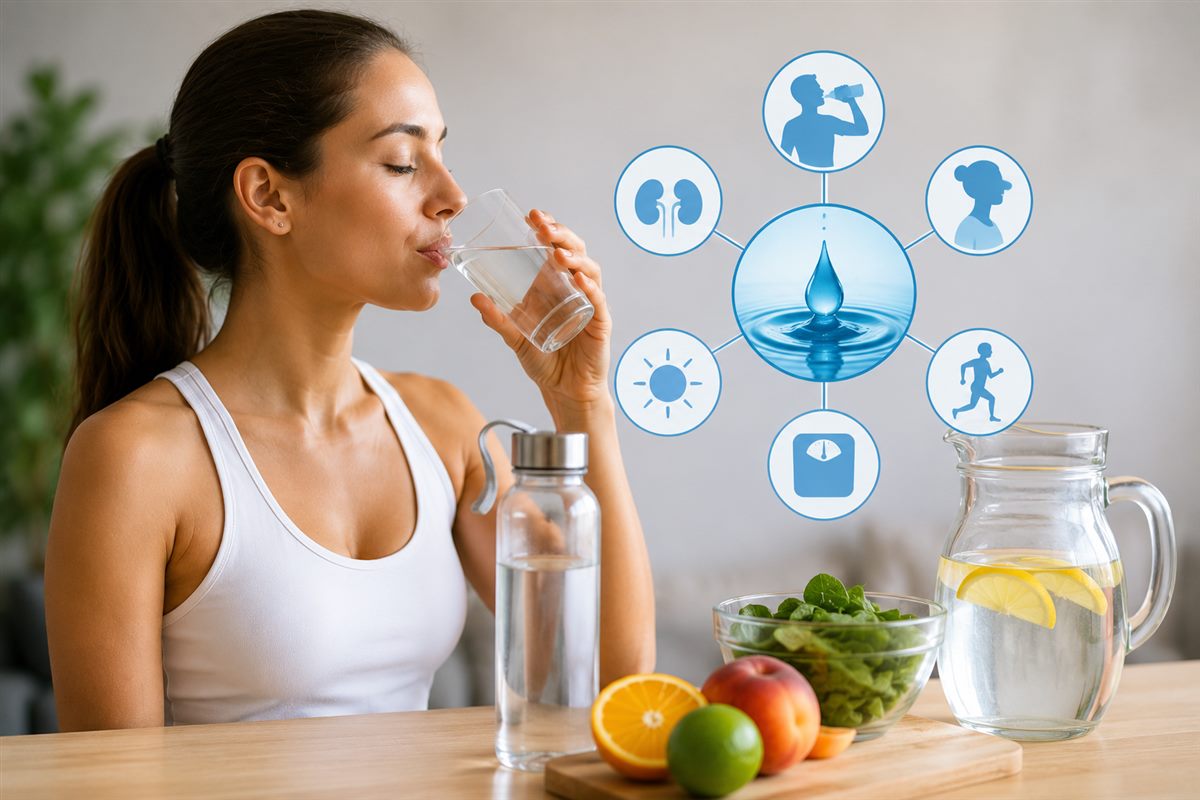
Daily fluid needs vary significantly based on: Body size: larger bodies need more fluid. Physical activity: sweat losses of 0.5-2L per hour during exercise substantially increase needs. Climate: hot, humid environments increase sweat losses. Diet: fruits and vegetables are 85-95% water — people eating large amounts of whole plant foods get significant hydration from food. The Institute of Medicine’s general guidance of approximately 3.7L/day for men and 2.7L/day for women covers total water from all sources (food + beverages), not just drinking water — and represents an average population estimate, not a prescription.
Practical hydration guidance
Reading your hydration status
The most practical daily hydration indicator is urine color. Pale yellow (like lemonade) indicates good hydration. Dark yellow or amber suggests mild dehydration — drink more. Colorless urine suggests over-hydration — you don’t need to drink more. Thirst is also a reliable indicator in most healthy adults — the caveat being that thirst sensitivity declines in older adults (over 65), making deliberate hydration habits more important with age. Performance declines in sport (endurance and cognitive tasks) become measurable at approximately 2% bodyweight water loss — at which point thirst has already been signaling for some time.
Coffee, tea, and other beverages
The myth that coffee and tea are «dehydrating» because of caffeine’s mild diuretic effect has been refuted. At the doses found in typical coffee and tea consumption, the diuretic effect of caffeine is weak and outweighed by the fluid volume of the beverage. People who regularly drink coffee and tea are not chronically dehydrated compared to water drinkers. All beverages (including coffee, herbal tea, sparkling water, milk) contribute to daily fluid intake. Plain water is the best default — zero calories, zero additives — but it is not uniquely hydrating compared to other non-sugary beverages. Electrolytes (sodium, potassium) become relevant for rehydration after significant exercise sweat losses; plain water is sufficient for typical daily hydration.
Conclusion: trust your thirst, check your urine, adjust for context
The pragmatic hydration guide: drink when thirsty, aim for pale yellow urine as a daily check, increase intake in hot weather or during exercise, and don’t worry about hitting a specific daily number. For most healthy adults in temperate climates with moderate activity, simply having water consistently available and drinking when thirsty covers needs entirely.
The main practical recommendation is to make water the default beverage — replace sugar-sweetened drinks not because water has special hydrating properties but because it has no added sugar or calories. Hydration status matters; hitting an arbitrary daily water quota does not.