
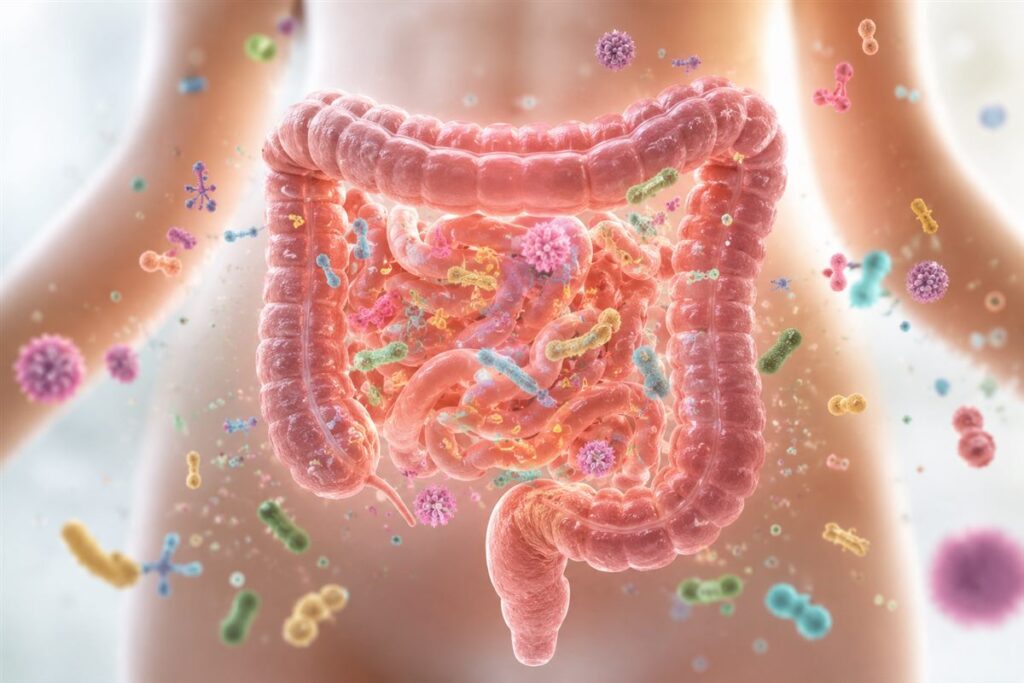
The human body contains approximately 37 trillion human cells — and roughly 38 trillion microbial cells. This community of bacteria, viruses, fungi, and other microorganisms that inhabits your gut, skin, and other surfaces is collectively called the microbiome. The gut microbiome in particular — the approximately 1,000 bacterial species living in your intestines — has emerged as one of the most important and actively researched areas in all of health science.
What researchers have discovered in the past two decades is that the gut microbiome is not a passive bystander — it is an active participant in digestion, immune function, mental health, skin health, metabolism, and even the regulation of gene expression. Understanding it won’t give you a perfect roadmap (the science is still young), but it gives you a powerful framework for understanding why so many aspects of health connect through what happens in your gut.
What the gut microbiome actually does
Your gut bacteria perform functions that your own cells cannot. They ferment dietary fiber into short-chain fatty acids (SCFAs) — particularly butyrate, propionate, and acetate — that fuel the cells lining the intestinal wall, reduce inflammation, and support metabolic health. They synthesize vitamins (including vitamin K and some B vitamins). They train and calibrate the immune system. And they produce neurotransmitters — including about 90-95% of the body’s serotonin — through what is called the gut-brain axis.

The gut-brain axis
The gut and the brain are in constant, bidirectional communication via the vagus nerve, the enteric nervous system, and the bloodstream. This communication highway is called the gut-brain axis. Gut bacteria influence the production of serotonin, dopamine precursors, GABA, and other neurotransmitters that directly affect mood, anxiety, cognition, and stress response.
This is not metaphorical — it’s physical chemistry. Studies in both animal models and humans have found that specific bacterial profiles in the gut correlate with depression, anxiety, and cognitive function. Probiotic interventions have shown modest but measurable effects on mood and anxiety in several clinical trials. The connection is real, and its implications for mental health treatment are still being mapped.
The microbiome and your skin
The gut-skin axis is another emerging area of research. Dysbiosis (microbial imbalance) in the gut has been linked to inflammatory skin conditions including acne, eczema, psoriasis, and rosacea. Leaky gut — increased intestinal permeability that allows bacterial components to enter the bloodstream — triggers systemic inflammation that can manifest on the skin. Conversely, people with healthy, diverse gut microbiomes tend to have better skin barrier function and lower inflammatory skin reactivity.
How to care for your gut microbiome
The microbiome is shaped — for better or worse — by virtually every lifestyle choice you make. Diet is the primary driver, but sleep, exercise, stress, antibiotic use, and birth method all play significant roles in determining the diversity and function of your microbial community.
Feed it fiber: prebiotics
Dietary fiber is the primary food source for beneficial gut bacteria. Specifically, prebiotic fibers — found in onions, garlic, leeks, asparagus, bananas, oats, and legumes — selectively feed the bacteria that produce SCFAs and contribute most to gut health. The goal is variety and abundance: most people eat far less fiber than the recommended 25-38 grams per day.
Plant diversity matters enormously. A landmark study by the American Gut Project found that people who eat 30 or more different plant foods per week have significantly more diverse microbiomes than those who eat 10 or fewer. Diversity within the microbiome is consistently associated with better health outcomes across virtually every domain studied.
Introduce live cultures: probiotics and fermented foods
Fermented foods — yogurt, kefir, kimchi, sauerkraut, miso, tempeh, and kombucha — contain live microorganisms that temporarily inhabit the gut and can positively influence the existing microbial community. A 2021 Stanford study found that a high-fermented-food diet increased microbiome diversity and reduced markers of inflammation more effectively than a high-fiber diet alone. Combining both approaches appears to be optimal.
Conclusion: your gut is your second brain
The gut microbiome represents one of the most exciting and still-unfolding frontiers in health science. What we know with confidence is that it plays a central role in immunity, mental health, metabolic function, and even skin health — and that the foods and habits you choose every day directly shape it.
The practical prescription is clear: eat more fiber from diverse plant sources, include fermented foods regularly, reduce ultra-processed food intake (which disrupts microbial diversity), manage stress (which significantly alters gut bacteria), get enough sleep (which affects microbiome composition), and avoid unnecessary antibiotic use (which can dramatically reduce diversity for months to years).
Your microbiome is not fixed. It responds — relatively quickly — to changes in diet and lifestyle. Taking care of it is one of the highest-leverage investments you can make in your long-term health.