
Hydration advice is saturated with numerical rules (8 glasses a day, 2–3 liters daily, half your body weight in ounces) that have a weaker evidence base than their confident promotion suggests. The science of hydration is more nuanced: individual needs vary substantially with body size, activity level, climate, diet, and health status; the body has sophisticated mechanisms for regulating hydration that work well in most healthy adults; and the signs of clinically meaningful dehydration are more specific than commonly believed.
Where «8 glasses a day» came from (and why it’s wrong)
The origin of the 8×8 rule (eight 8-ounce glasses per day) is traced to a 1945 US Food and Nutrition Board recommendation that people consume 2.5 liters of water daily — but the same document noted that «most of this quantity is contained in prepared foods.» The «from drinks only» interpretation was a truncation that survived. Heinz Valtin’s 2002 review in the American Journal of Physiology searched for scientific evidence supporting 8×8 and found none. The actual daily water requirement for the average sedentary adult in a temperate climate is approximately 2–2.5 liters total, of which roughly 1 liter comes from food (fruits, vegetables, and other water-containing foods provide substantial hydration). The remaining 1–1.5 liters from beverages is significantly less than 8 glasses.
The thirst mechanism: more reliable than most people think
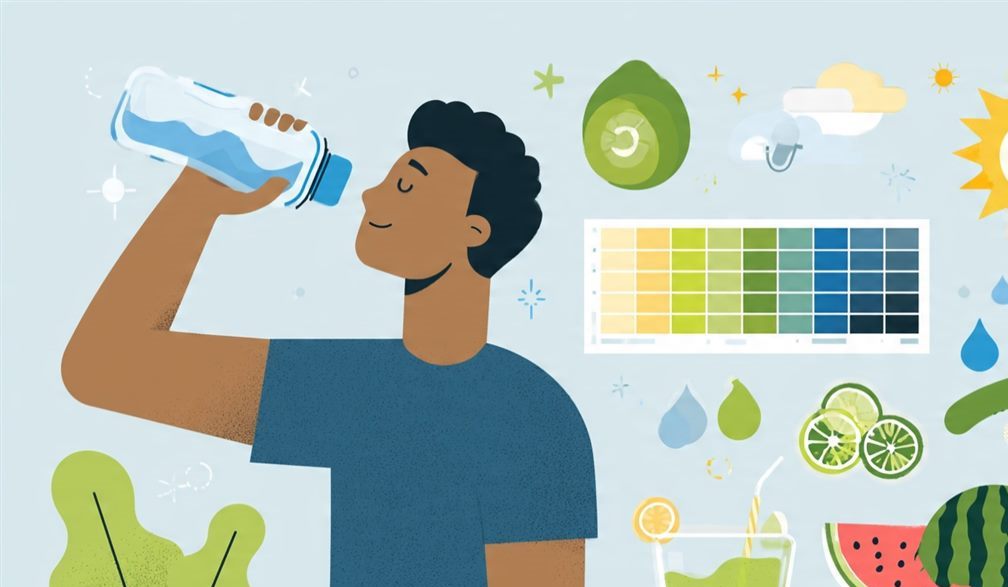
For healthy adults without kidney disease or conditions affecting thirst sensation, the body’s thirst mechanism is a well-calibrated hydration sensor. Osmoreceptors in the hypothalamus detect plasma osmolality changes of as little as 1–2%, triggering thirst before significant dehydration occurs. Drinking to thirst — rather than following a fixed daily number — is the approach recommended by multiple hydration physiologists and is what the body evolved to do. The exceptions where thirst is less reliable: older adults (thirst sensitivity declines with age); during intense exercise (exercise can suppress thirst even during significant fluid loss); in very hot environments; and in certain medical conditions affecting kidney function or hormone regulation.
What dehydration actually does (and at what point)
Mild dehydration (1–2% body mass loss) produces measurable effects in some studies: reduced exercise performance, increased perceived exertion, modest impairment in cognitive tasks requiring attention and working memory (particularly in conditions of heat or exercise). The effects at rest and in cool conditions are more contested — some studies find cognitive impairment at 1–2%; others find minimal effects in well-controlled trials. Clinically significant dehydration (3–5% body mass) reliably produces: significant reduction in exercise capacity, headache, fatigue, reduced urine output, and dry mouth. Severe dehydration (>5–8%) produces serious symptoms: confusion, rapid heart rate, dizziness on standing — this requires medical attention and does not occur from ordinary daily activity in a healthy adult with access to water. The practical implication: mild under-drinking in a sedentary adult in a temperate climate produces minimal consequences; the dramatic claims about chronic mild dehydration causing disease are not supported by strong evidence.
Practical hydration guidance that is actually evidence-based
Urine color as a guide: the most practical hydration indicator is urine color. Pale straw yellow (not colorless) indicates good hydration; colorless may suggest over-hydration (rare but possible); dark amber suggests drinking more. This requires no calorie counting, no apps, and reflects actual hydration status rather than a generic rule. Increased needs in specific circumstances: physical activity (add approximately 500ml–1L per hour of moderate exercise), hot climate (significant additional sweat losses), illness with fever, vomiting, or diarrhea (electrolyte replacement also important), pregnancy and breastfeeding (increased requirements). Does coffee count? Yes. The moderate diuretic effect of caffeine does not result in net water loss at typical consumption levels (up to 4 cups/day). Coffee and tea contribute to daily fluid intake. Water vs. other beverages: water is optimal — no calories, no sugar, no caffeine. But non-alcoholic beverages contribute to hydration needs. Alcohol is genuinely dehydrating (suppresses ADH, increasing urine output beyond the volume consumed) and does not count as hydration.
Conclusion: drink when thirsty, watch your urine, adjust for activity
The most useful hydration guidance: drink when you feel thirsty (a reliable signal in most healthy adults), check urine color as a practical status indicator, and increase intake significantly during exercise, heat, or illness. The elaborate hydration tracking systems, the pressure to «pre-hydrate» constantly, and the specific liter targets that circulate online are largely unsupported by strong evidence for healthy, non-athletic adults in ordinary conditions. Hydration matters — but it does not require the level of vigilance that its wellness industry promotion implies.