

Walking is so accessible and familiar that it tends to be dismissed as «not real exercise» in a fitness culture that conflates intensity with effectiveness. This is a significant error. The epidemiological evidence for walking is extensive and consistently positive: regular brisk walking is associated with reduced cardiovascular disease risk, reduced type 2 diabetes incidence, lower all-cause mortality, improved cognitive function, reduced depression and anxiety symptoms, better sleep quality, and longer life expectancy. These benefits are achieved at exercise intensities well below what most fitness culture considers serious — which makes walking the single most impactful health intervention for the large proportion of the population that doesn’t exercise at all.
What the research shows about walking volume
A 2022 JAMA Internal Medicine meta-analysis of 15 studies (226,889 participants) found a dose-response relationship between daily step count and mortality risk reduction that plateaus around 8,000-10,000 steps per day for most adults — with significant risk reduction beginning as early as 2,500-4,000 steps per day compared to sedentary individuals. A 2021 JAMA Network Open study found that 7,000 steps per day was associated with a 50-70% lower risk of premature death compared to fewer than 7,000 steps. The 10,000-step target, while useful as a round-number goal, is not derived from specific research — but it falls within the range that research shows meaningful health benefit. The key insight: even modest increases from sedentary levels produce substantial risk reduction.
Brisk vs. casual walking
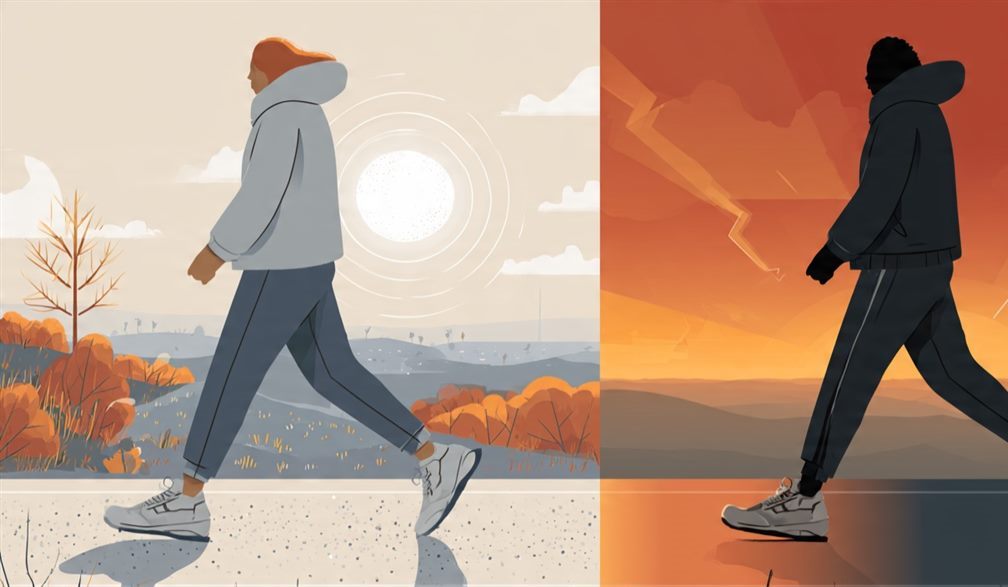
Pace matters. A large UK Biobank study (Yates et al., 2021, JAMA Internal Medicine) found that brisk walking (defined as 100+ steps per minute, or approximately 4-5 km/h — a pace at which you can hold a conversation but are breathing noticeably) was associated with significantly greater cardiovascular and mortality risk reduction than slow walking at the same total step count. Brisk walking elevates heart rate into the moderate-intensity zone and produces cardiovascular adaptations that casual strolling does not fully replicate. The practical implication: not all walking is equally beneficial — walking with purpose and pace substantially increases the health return.
Making walking a consistent habit
Walking for cognition and mood
Beyond cardiovascular and metabolic effects, walking has distinctive benefits for cognitive function and mood that appear to be partially independent of general exercise effects. A Stanford University study found that walking (particularly in natural settings — parks, green spaces) produced a 12% reduction in rumination (repetitive negative thinking) and reduced activity in the subgenual prefrontal cortex associated with depressive rumination, compared to walking in urban settings. Attention Restoration Theory suggests that natural environments produce effortless engagement that allows directed attention to recover — explaining the subjective feeling of mental clarity after a walk in nature. For people with demanding cognitively-intensive work, a midday walk in a park or green space may be one of the most effective cognitive recovery practices available.
Integrating more walking into daily life
The most effective way to increase walking is environmental design rather than scheduling willpower: make walking the path of least resistance. Practical approaches: walk or cycle for short errands instead of driving (distances under 2km); take the stairs consistently; park at the far end of car parks; get off public transport one stop early; take walking meetings instead of sitting meetings for one-on-one calls; use a lunch break for a 20-minute walk; schedule a regular after-dinner walk (which also improves postprandial blood glucose regulation — even a 10-minute after-meal walk significantly blunts the glycemic spike from a carbohydrate-containing meal). These accumulate substantially over the course of a week without requiring dedicated workout time.
Conclusion: 7,000+ steps per day, brisk pace, ideally in nature
Walking deserves rehabilitation as a genuine exercise recommendation rather than a fallback for people who «can’t» do real exercise. For deconditioned or sedentary individuals, it is the highest-value starting point. For active individuals, it is an underappreciated complement to structured training — accessible, joint-friendly, cognitively restorative, and cumulative.
The target: 7,000-10,000 steps per day, with a meaningful portion at a brisk pace. For most people who start at low activity levels, reaching this target produces significant health improvement. It doesn’t require sportswear, a gym, or athletic skill. It requires walking — which every healthy adult already knows how to do.