
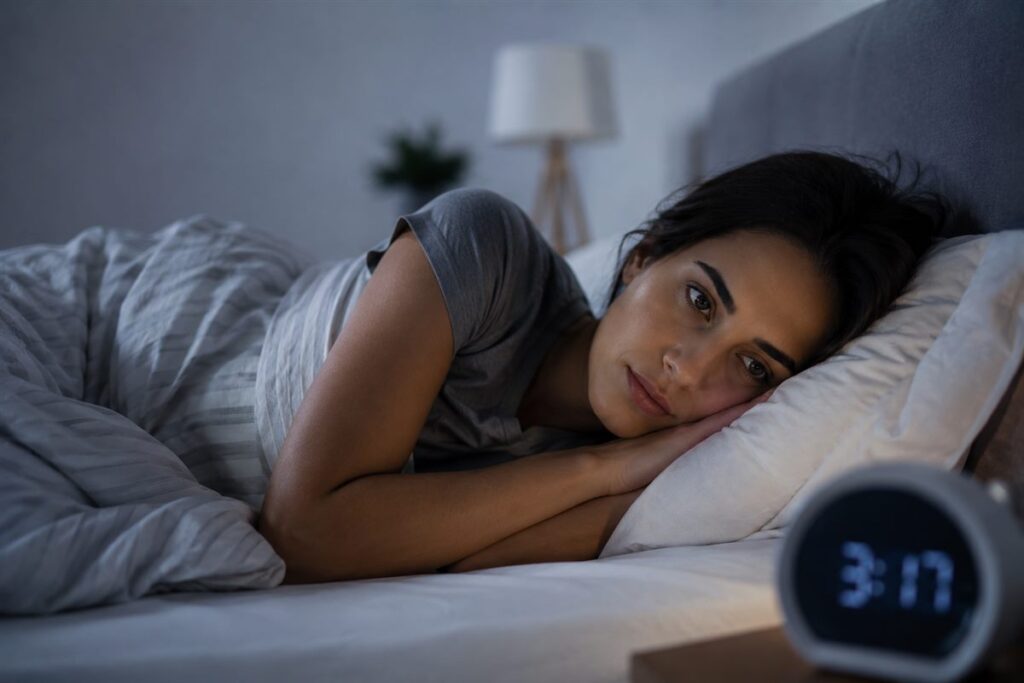
Insomnia affects approximately one in three adults at some point and affects 10-15% of adults chronically. Despite this prevalence, it remains poorly understood by most people who experience it — and treated suboptimally, often with medications that address symptoms without resolving the underlying patterns that maintain it. This article covers what insomnia actually is, why it persists, and what the evidence says about treating it effectively.
What insomnia is — and what it isn’t
Insomnia is not simply «not sleeping enough.» The clinical definition requires three elements: Sleep difficulty — trouble falling asleep (sleep onset insomnia), staying asleep (sleep maintenance insomnia), or waking too early; Daytime impairment — the sleep difficulty must produce daytime consequences: fatigue, cognitive impairment, mood disturbance, performance reduction; Adequate opportunity for sleep — the disorder is distinguished from sleep restriction chosen by circumstance (a newborn parent who can’t sleep enough due to caregiving demands doesn’t have insomnia by definition). Insomnia is diagnosed as chronic when it occurs ≥3 nights per week for ≥3 months. It is among the most common reasons for medical consultation worldwide and frequently co-occurs with anxiety, depression, and chronic pain — a bidirectional relationship where each worsens the other.

Why insomnia persists: the 3P model and hyperarousal
The most useful clinical model of insomnia (Spielman’s 3P model) identifies three factors: Predisposing factors — traits that increase vulnerability (anxiety tendency, high cortical arousal, tendency to ruminate); Precipitating factors — stressful events or changes that trigger the initial episode (illness, bereavement, work stress, shift changes); Perpetuating factors — the behaviors and beliefs that transform acute insomnia into chronic insomnia. The perpetuating factors are the most clinically important: compensatory behaviors like spending extra time in bed, napping, reducing activity, and anxious monitoring of sleep (clock-watching, calculating how many hours are left) all worsen insomnia over time. The hyperarousal model: insomnia patients show elevated cortisol, higher heart rate, and higher body temperature around sleep time — signs of physiological activation. The anxious attention to sleep itself creates the activation that prevents it. Trying harder to sleep makes it worse.
Evidence-based treatment
Cognitive Behavioral Therapy for Insomnia (CBT-I)
CBT-I is the first-line, most evidence-supported treatment for chronic insomnia — recommended above sleep medication by multiple national and international clinical guidelines. Meta-analyses consistently show CBT-I is more effective than sleep medication at 6 and 12 months, with remission rates of 40-50% and improvement rates of 70-80%, and unlike medication, effects are sustained and often improve after treatment ends. Core components: Sleep restriction therapy: temporarily reduces time in bed to the actual sleep time (e.g., 5.5 hours if someone is only sleeping 5.5 hours despite 8 hours in bed), creating sleep pressure that consolidates sleep and restores the bed-sleep association. This is the most powerful and most uncomfortable component. Stimulus control: use the bed only for sleep; get out of bed if awake for more than 20 minutes; consistent wake time. Cognitive restructuring: addressing catastrophic beliefs about sleep («I can’t function on less than 8 hours,» «If I don’t sleep tonight I’ll be ruined tomorrow») that increase pre-sleep arousal. Relaxation training: progressive muscle relaxation, diaphragmatic breathing. Sleep hygiene education: the foundation covered in the previous article. CBT-I is now available digitally through apps (Sleepio, Somryst) and online programs at significantly lower cost and better accessibility than therapist-delivered CBT-I.
Sleep medication — appropriate uses and limitations
Sleep medications (benzodiazepines, Z-drugs, antihistamines, melatonin, low-dose doxepin) have a role in acute insomnia — short-term use during a high-stress period, before a major procedure, or during jet lag adjustment. The limitations for chronic insomnia: most sleep medications lose efficacy within 2-4 weeks of regular use due to tolerance; Z-drugs and benzodiazepines carry dependency and withdrawal risks; medication does not address the perpetuating factors that maintain insomnia; and patients often experience worsened insomnia (rebound insomnia) when discontinuing. Melatonin is mildly effective for circadian timing problems (jet lag, shift work, DSWPD) but has minimal evidence for primary insomnia. The optimal use of sleep medication in chronic insomnia: short-term (2-4 weeks maximum), in combination with CBT-I, not instead of it.
Conclusion: insomnia is treatable — but not primarily with pills
Chronic insomnia is one of the most effectively treatable health conditions when the right intervention is applied. The right intervention is CBT-I — not more time in bed, not sleeping pills as a long-term solution, and not simply waiting it out while implementing sleep hygiene that doesn’t address the hyperarousal and perpetuating behaviors driving the problem.
If you experience insomnia ≥3 nights per week for ≥3 months: try a digital CBT-I program (Sleepio, Somryst, or equivalent) as a first step — the evidence for digital CBT-I is nearly as strong as face-to-face delivery. If symptoms are severe, a GP referral to a sleep specialist for evaluation is warranted, as some insomnia presentations require investigation to rule out sleep apnea or other underlying conditions.