
Environmental exposure — UV radiation, humidity, salt water, chlorine, wind, and pollution — contributes to cumulative hair damage that many people underestimate. Unlike heat styling damage (which is acute and visible), environmental damage accumulates gradually and may not become obvious until months of summer sun or regular pool exposure have significantly degraded the hair’s structural integrity and color.
Protection is significantly easier than repair, and most protective measures are simple habits rather than expensive products. Understanding which environmental stressors cause which types of damage helps you prioritize the right protective actions for your lifestyle.
UV damage: hair needs sun protection too
UV radiation affects hair differently than skin — there are no living cells to repair DNA damage — but it significantly damages the hair shaft itself. UV light breaks down the protein bonds in the cortex, oxidizes melanin (causing color fading, particularly reds and brunettes), destroys the lipid layer on the cuticle, and generates free radicals within the shaft that degrade structural proteins. Fair, fine, and chemically treated hair is most susceptible.
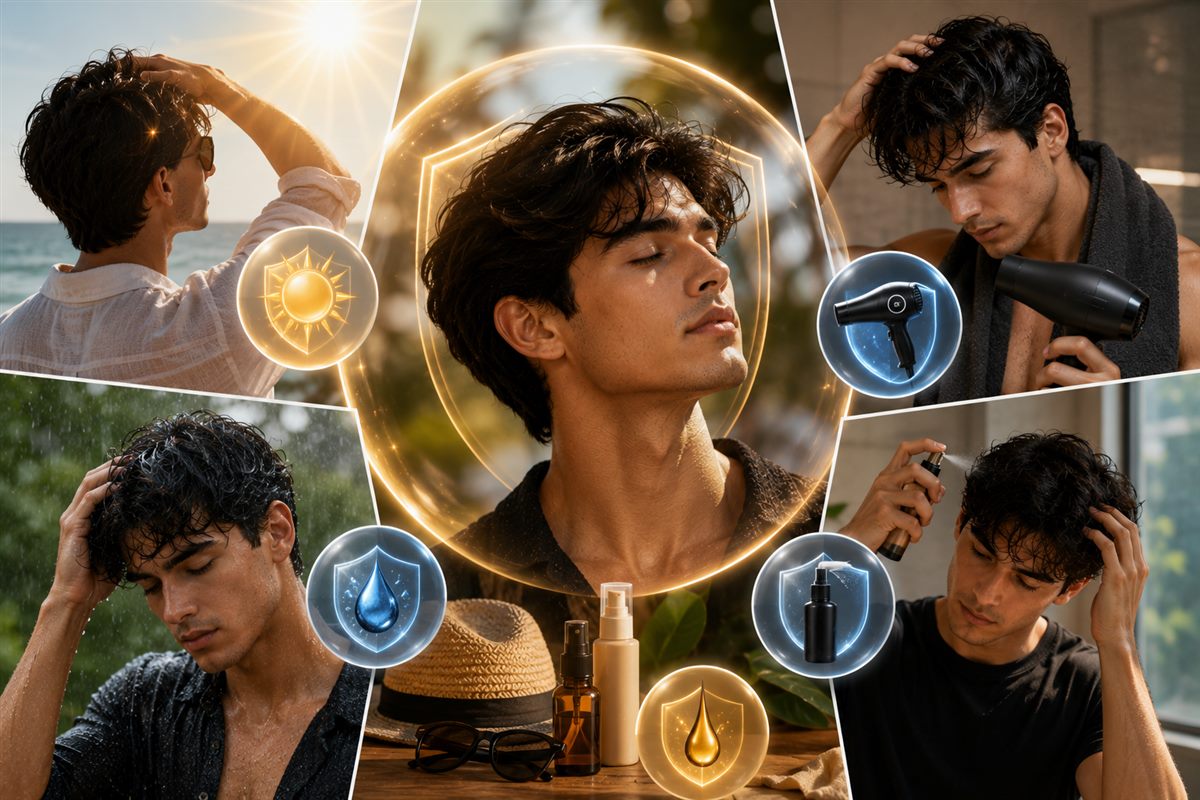
Protecting hair from UV
The most effective protection is physical: wearing a hat or scarf provides complete UV blocking for covered hair. For uncovered hair, leave-in conditioners and sprays with UV filters (look for benzophenone-3/4, ethylhexyl methoxycinnamate, or polysilicone-15 in formulas specifically labeled «UV protection») provide meaningful protection when applied before sun exposure. Reapplication after swimming or extended sweating improves protection. Oils (argan, avocado) do not provide meaningful UV protection on their own despite marketing claims, but they do help seal the cuticle and reduce UV-induced oxidative damage somewhat.
Humidity, chlorine, and salt water
Managing humidity and frizz
Frizz in humidity is caused by the hair shaft absorbing excess moisture from the air, causing the cortex to swell unevenly — particularly in hair with damaged or open cuticles and high porosity. The cuticle’s roughened surface catches moisture unevenly, creating the characteristic puffed, frizzy appearance. Prevention: sealing the cuticle with leave-in conditioners, anti-humidity serums (containing silicones, glycerin in appropriate amounts, or natural oils that coat the shaft), and applying products on damp rather than dry hair to lock in controlled moisture before the humidity can penetrate. The Curl Girl or Curly Hair Method’s emphasis on LOC (liquid-oil-cream) layering was developed precisely to address this challenge in curly and wavy hair, which is inherently more porous.
Chlorine and salt water
Chlorine is one of the most damaging substances for hair — it strips the lipid layer from the cuticle, oxidizes both natural and artificial color, and can cause a greenish tint in blonde hair (from copper in pool water, not the chlorine itself). Before swimming, wet hair thoroughly with clean water first — saturated hair absorbs less pool water. Apply a leave-in conditioner or coconut oil before entering the pool; these create a partial barrier. Rinse immediately after swimming and use a chelating shampoo (containing EDTA or phytic acid) weekly during swimming periods to remove mineral and chemical buildup. Salt water from the sea is similarly drying and cuticle-roughening — similar pre- and post-swim protocols apply.
Conclusion: prevention during exposure, recovery after
The best approach to environmental hair protection is a two-part protocol: minimize exposure damage through simple protective habits (hats, pre-swim coating, UV protection products), and restore what was depleted afterward (chelating shampoo after pool/sea, deep conditioning after sun exposure, cuticle-sealing products in humidity). Neither part requires expensive specialty products — the principles translate well to affordable alternatives.
Hair that is regularly exposed to heavy environmental stressors — regular swimmers, people who spend significant time outdoors, or those living in very sunny or humid climates — may benefit from increasing deep conditioning frequency and using a chelating treatment monthly to prevent cumulative product, mineral, and chemical buildup that compounds damage over time.


