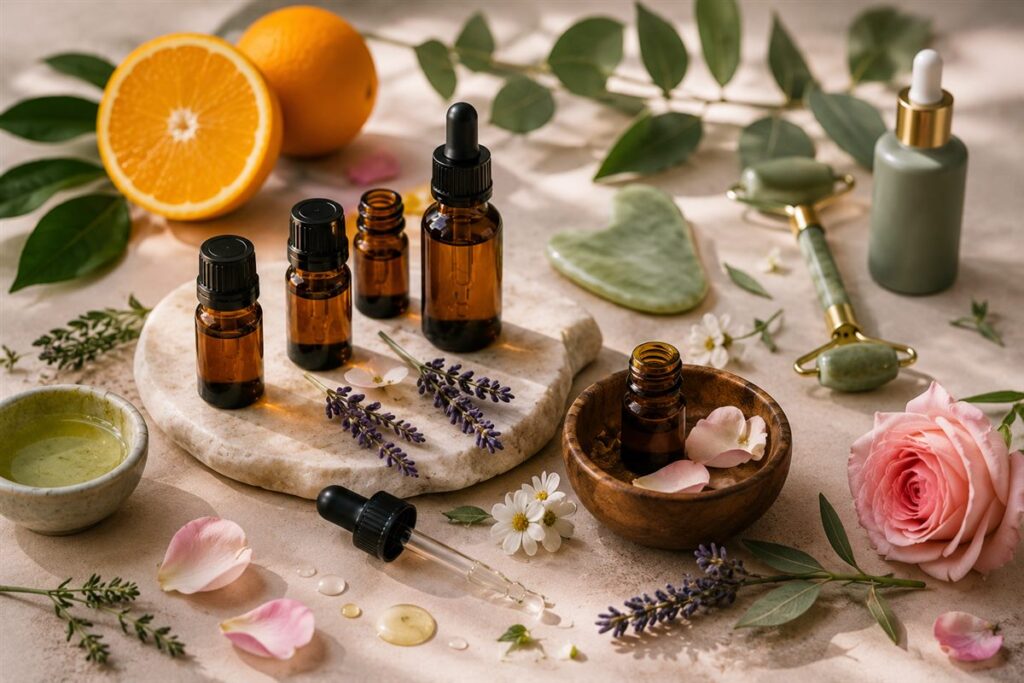
Essential oils are highly concentrated, volatile plant extracts containing bioactive compounds at concentrations far higher than found in the original plant material. This concentration is what gives them genuine pharmacological activity — and genuine risk potential if used carelessly. The wellness industry often presents them as universally safe because they’re «natural»; the dermatology literature tells a more nuanced story: essential oils are among the most common causes of allergic contact dermatitis from skincare products. Understanding both what they can do and how to use them safely captures the value while avoiding the well-documented risks.
Essential oils with genuine evidence
Tea tree oil (Melaleuca alternifolia)
Among the most thoroughly studied essential oils for topical application. Key evidence: multiple RCTs showing tea tree oil at 5% concentration is equivalent to 5% benzoyl peroxide for acne reduction (with slower onset but lower skin irritation); strong antifungal evidence for Malassezia-related dandruff (2-3% in shampoo); antibacterial activity against a broad range including methicillin-resistant Staphylococcus aureus (MRSA) in vitro; and evidence for tinea pedis (athlete’s foot) at 10-50% concentrations. Safety: must be diluted for topical use (1-2% in carrier oil for face; 2-5% for body). Undiluted tea tree oil causes severe skin irritation and is toxic if ingested. Allergen potential exists — test before widespread use.
Lavender oil
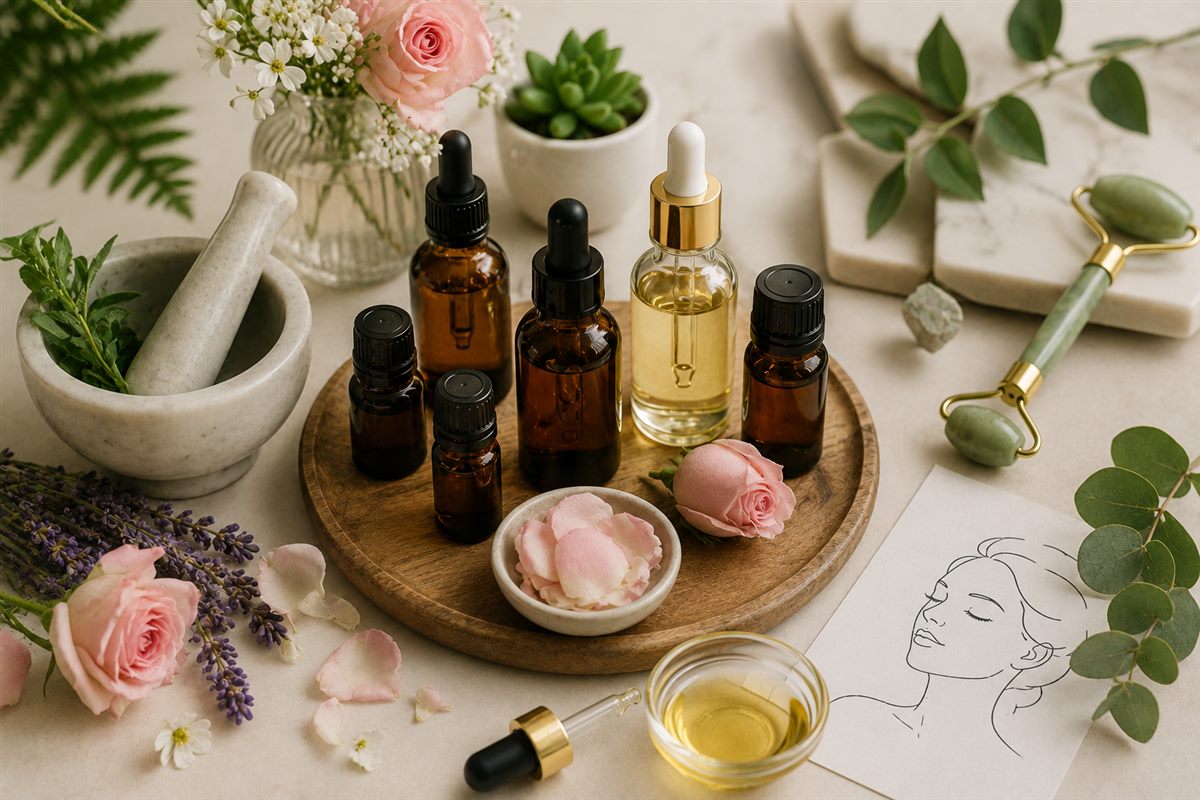
Lavender (Lavandula angustifolia) has evidence for: mild antimicrobial activity; anxiety and stress reduction via aromatherapy (inhalation) — multiple studies showing reduced cortisol and self-reported anxiety with inhaled lavender; wound healing support at diluted concentrations; and mild analgesic effects. In topical application for beauty, lavender at 0.5-1% dilution in carrier oil is generally well-tolerated and has mild anti-inflammatory properties. However, lavender contains linalool and linalyl acetate, which oxidize on skin and become significant contact allergens — fresh, properly stored lavender oil is less allergenic than oxidized oil. Citrus contact (limonene in many citrus essential oils) is phototoxic — never apply citrus essential oils to sun-exposed skin.
Rosemary oil
Rosemary oil has emerging evidence for hair growth — a 2015 study (Panahi et al.) found rosemary oil equivalent to 2% minoxidil for androgenetic alopecia over 6 months, with less scalp itching. The proposed mechanism involves increased microcirculation to the scalp. A few subsequent supportive studies have been published; the evidence is promising but still early-stage. Use at 1-2% diluted in a carrier oil massaged into the scalp and left for 30+ minutes before washing.
Essential oil safety guidelines
Non-negotiable safety rules
Never apply undiluted (neat) essential oils to skin. Even the gentlest essential oils at undiluted concentration cause irritation and sensitization; some (clove, cinnamon bark, oregano) cause chemical burns. The maximum safe dilution for most face applications is 1-2%; for body 2-3%; for hair and scalp 1-3%. Patch test before any new oil: apply the diluted oil to the inner forearm, cover with a bandage, and wait 48 hours before using on face or body. Essential oils are among the most common contact allergens in cosmetics. Photosensitizing oils: avoid citrus essential oils (bergamot, lemon, lime, grapefruit, orange) and certain other oils (angelica root, verbena, fig leaf) on any skin that will be sun-exposed for 12-24 hours after application. These contain furanocoumarins that cause severe phototoxic reactions. Bergamot is one of the most problematic — «bergapten-free» versions exist for topical use. Pregnancy: many essential oils are contraindicated in pregnancy — particularly clary sage, rosemary, basil, and camphor. Consult healthcare guidance before using essential oils during pregnancy. Storage: store in dark glass bottles away from heat and light; check expiry dates; citrus oils oxidize particularly quickly (6-12 months once opened).
Conclusion: high potency means high responsibility
Essential oils occupy a genuinely useful place in natural beauty when used correctly: tea tree for acne and dandruff; rosemary for scalp circulation and possible hair growth; lavender for aromatherapy stress reduction and gentle topical applications. The key is always appropriate dilution, patch testing, and avoiding photosensitizing oils on sun-exposed skin.
The worst outcomes with essential oils come from the «natural means safe» assumption — the assumption that because something comes from a plant, higher concentrations and undiluted use are fine. Essential oils are highly concentrated pharmacological actives; they deserve the same careful approach you would give to any active ingredient in a skincare routine. Respect the concentration, dilute appropriately, and the benefits are real and accessible.