

The sense that time in nature feels restorative is so universal across cultures that it might be dismissed as subjective sentiment. The research suggests otherwise. A growing body of experimental and epidemiological evidence shows measurable neurobiological and psychological effects of nature exposure on stress hormones, mood, cognitive function, and anxiety — effects that are distinct from the benefits of physical activity in those settings. Nature is not simply a pleasant backdrop for exercise; the natural environment itself produces mental health benefits through mechanisms that are increasingly well-understood.
The research on nature and mental health
Key findings from the field: A landmark 2015 Stanford study (Bratman et al.) found that a 90-minute walk in a natural setting (vs. an urban setting) produced significantly reduced activity in the subgenual prefrontal cortex — a region associated with rumination and depressive thought patterns — as measured by fMRI. Importantly, urban walking did not produce this effect, suggesting the natural setting (not simply walking) was the active ingredient. A 2019 study in Scientific Reports (White et al., using UK national data from 20,000 people) found that spending at least 120 minutes per week in nature was associated with significantly better health and wellbeing than no nature contact — with a dose-response relationship leveling off at approximately 200-300 minutes per week. A large-scale analysis using the Understanding Society dataset found that urban green space within residential neighborhoods was associated with reduced psychological distress, lower cortisol, and reduced rates of depression and anxiety independent of socioeconomic factors.
The mechanisms: why nature works
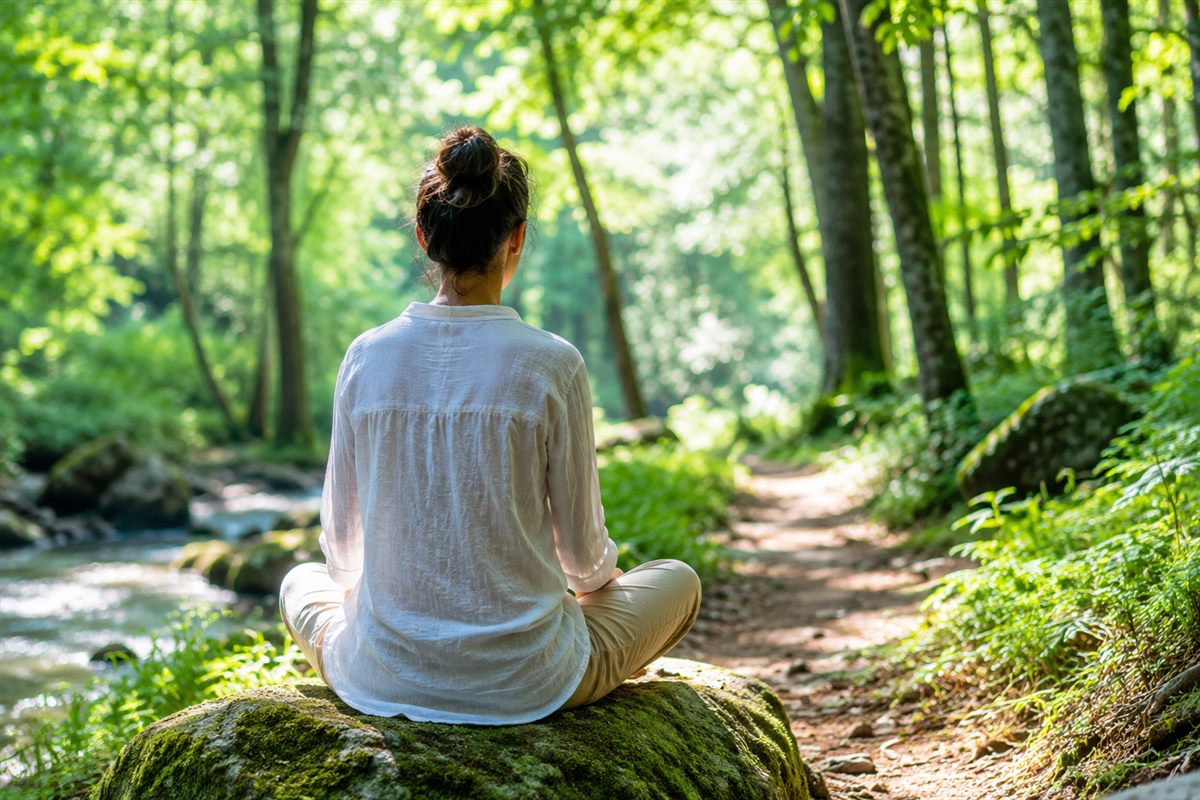
Attention Restoration Theory (ART): proposed by Kaplan and Kaplan, suggests that natural settings engage «soft fascination» — gentle, effortless attention (the movement of water, rustling leaves, birdsong) — allowing the directed attention system (which depletes with sustained cognitive work) to recover. Urban environments, by contrast, require constant directed attention to navigate safely (traffic, crowds, signage), which continues to deplete rather than restore attention capacity. Stress Recovery Theory: Ulrich’s research found that nature exposure produces rapid physiological stress recovery — cortisol, heart rate, and blood pressure decrease measurably within minutes of entering natural settings. This effect appears to be evolutionarily hardwired — savannas (the ancestral environment) are processed as fundamentally safe and restorative. Microbiome effects: soil contact and the diverse microbial communities of natural environments may modulate immune function and the gut-brain axis, potentially contributing to the mood effects of nature exposure through mechanisms beyond the visual and auditory.
Forest bathing (Shinrin-yoku) and urban green space
Forest bathing — the evidence
Shinrin-yoku (forest bathing) is a Japanese practice of spending immersive time in forested environments. Since the 1980s, it has been extensively studied in Japan and internationally. Consistent findings from RCTs and controlled studies: significant reductions in cortisol, blood pressure, pulse rate, and sympathetic nervous system activity compared to matched urban control environments; improvements in mood and anxiety scores; and increased natural killer (NK) cell activity (a measure of immune function) — an effect attributed to phytoncides (volatile compounds produced by trees) that persist for at least a week after a forest visit. The Japanese government incorporated Shinrin-yoku into public health policy, designating certified forest therapy trails nationally.
Practical applications for urban dwellers
Access to wilderness is not required for nature’s benefits. Research shows that urban parks, street trees, garden spaces, and waterside settings produce meaningful — if somewhat smaller — effects compared to forests. Practical access strategies: schedule 2-3 hours of time in the most natural setting accessible (even a city park is significantly better than no natural contact); keep windows open or place plants in living and work spaces (indoor plants show modest but real effects on air quality and reported mood); walk routes with more vegetation when possible; use green spaces for lunch breaks rather than indoor environments. For people with limited outdoor access, even nature sounds (birdsong, water) and nature imagery show small but measurable cortisol-reducing effects — an imperfect substitute but not nothing.
Conclusion: 120+ minutes per week in natural settings — a simple, evidence-based prescription
The evidence-based recommendation: aim for at least 120 minutes per week in natural settings — a local park, a garden, a beach, a forest, or a riverside path. This doesn’t need to be in a single session; the benefit accumulates across multiple visits. The combination of nature exposure and light physical activity (walking) is additive — a walk in the park is significantly better for mental health than the same walk on a treadmill.
In an era of increasing urbanization and indoor sedentary work, deliberate contact with natural environments is a meaningful mental health practice with exceptionally low barriers. The prescription requires no equipment, no expertise, and no cost — just the intention to spend time outside, regularly.