

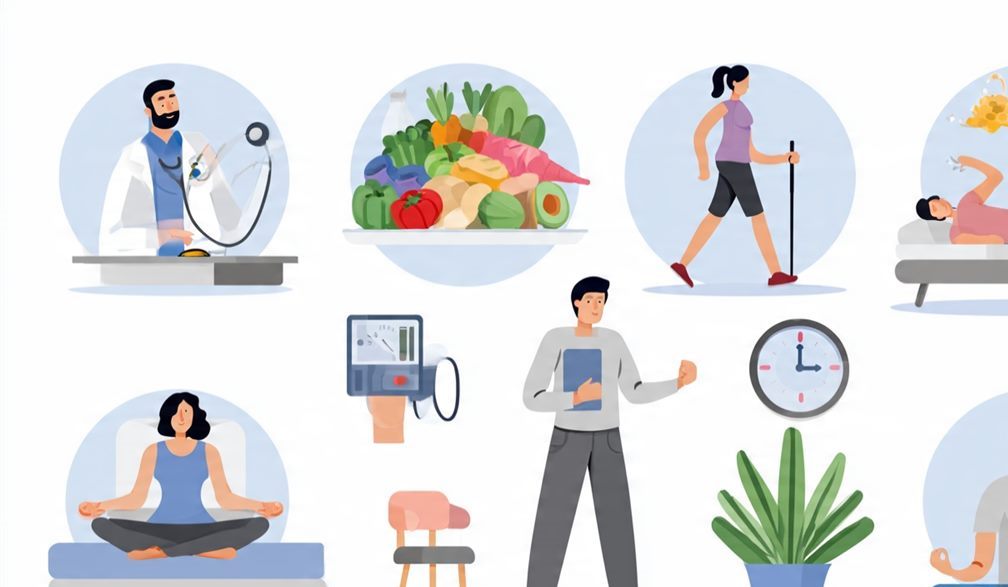
Preventive health encompasses two distinct domains: lifestyle behaviors that reduce disease risk over decades, and medical screenings that detect conditions early when treatment is most effective. Both matter, and the prioritization of each depends on age, sex, family history, and existing risk factors. This article covers the lifestyle factors and screenings with the strongest evidence — not an exhaustive checklist, but a hierarchy of what produces the greatest impact.
The five lifestyle factors with the strongest evidence
A 2018 study in Circulation (Li et al.) analyzing data from two large US cohort studies (120,000+ participants over 30 years) found that adhering to five lifestyle factors was associated with an additional 12–14 years of healthy life expectancy. The five: Non-smoking (the single most impactful modifiable lifestyle factor for health and longevity — smoking remains one of the largest preventable causes of premature death globally). Moderate alcohol consumption or abstinence (≤1 drink/day for women, ≤2 for men — at higher levels, cardiovascular and cancer risks increase). Healthy body weight (BMI 18.5–24.9, recognizing BMI’s limitations as a measure of metabolic health). Regular physical activity (≥30 minutes per day of moderate-intensity activity — the WHO 150 min/week guideline). Healthy diet (as measured by adherence to the AHEI — Alternate Healthy Eating Index: high in vegetables, fruits, whole grains, nuts, fish, polyunsaturated fats, and low in red/processed meat, trans fats, sodium, and sugar-sweetened beverages). Crucially, the benefits compound: people adhering to all five had far greater benefit than the sum of individual components. The individual factors most people can improve — diet, activity, and smoking — are also the ones with the most direct behavioral interventions.
The importance of sleep as a preventive factor
The original Circulation study did not include sleep as a factor (data were collected before sleep’s cardiovascular and metabolic risks were fully established). A subsequent 2022 update (adding sleep quality/duration as a sixth factor) found that adequate sleep (7–9 hours with good quality) independently contributed to healthy life expectancy — pushing the potential gain to 15+ years for all six factors combined. Sleep joins the classic five as a foundational preventive health behavior.
Key medical screenings by age
Medical screenings are preventive tools that detect conditions before symptoms appear. The value of a screening depends on: the condition’s prevalence and severity; the accuracy of the test; whether early detection actually changes outcomes; and the harms of false positives (unnecessary anxiety, invasive follow-up). Not every test marketed as preventive has net benefit. The ones with the strongest evidence (aligned with major guideline bodies — USPSTF, NHS, European Preventive Medicine): Blood pressure: hypertension affects approximately 30% of adults and is largely asymptomatic until organ damage occurs. Annual or biennial blood pressure measurement is recommended from age 18. Hypertension is highly treatable; undetected hypertension is one of the leading drivers of stroke and heart attack. Blood glucose / HbA1c: type 2 diabetes develops over years with prediabetes as a reversible intermediate stage. Screening every 3 years from age 35 (earlier for those with obesity or family history) allows intervention during the reversible prediabetes window. Cholesterol (lipid panel): elevated LDL is a major modifiable cardiovascular risk factor. Screening from age 20–25 provides baseline; more frequent monitoring from 40+ or with risk factors. Colorectal cancer screening: colonoscopy or stool-based tests from age 45 (some guidelines 50) — colorectal cancer is highly treatable when detected early, and precancerous polyps can be removed during colonoscopy. Cervical cancer (Pap smear + HPV testing): every 3–5 years for people with a cervix from age 21–25. Breast cancer (mammography): guidelines vary by country and organization; most recommend beginning at age 40–50, with individualized discussion of benefits and harms. Skin examination: annual skin self-examination; dermatologist evaluation for suspicious lesions — melanoma caught early is highly curable.
Conclusion: the highest-leverage preventive actions
The clearest hierarchy: if you smoke, stopping is the single highest-impact health decision available. After that, regular moderate physical activity, a predominantly whole-food diet, adequate sleep, and maintaining a healthy weight each contribute meaningfully to reducing the disease burden that ends or impairs most people’s healthy years prematurely. Medical screenings — blood pressure, glucose, cholesterol, and age-appropriate cancer screenings — catch conditions that lifestyle changes cannot retroactively prevent. The combination of both domains is what «preventive health» actually means in practice: living in ways that reduce disease risk, and finding problems early when they’re most treatable.