The scalp is skin — and like any skin, it has its own microbiome, sebaceous glands, barrier function, and capacity for both health and dysfunction. The hair that emerges from scalp follicles can only be as healthy as the environment in which it grows. Neglecting scalp health while focusing exclusively on hair shaft treatments is like trying to grow a beautiful garden in poor soil while obsessing over the leaves.
Scalp care has moved from a niche concern to a mainstream skincare conversation, and for good reason: dandruff, seborrheic dermatitis, scalp psoriasis, product buildup, and folliculitis are all extremely common, frequently undertreated, and can significantly affect both hair health and hair growth. Understanding these conditions helps distinguish between those you can address at home and those that warrant a dermatologist visit.
The scalp microbiome and why it matters
The scalp hosts a complex microbial ecosystem dominated by Malassezia fungi and various bacterial species. Malassezia is naturally present on all human scalps — it feeds on the fatty acids in sebum and is normal at balanced levels. The problems arise when this balance is disrupted: overgrowth of certain Malassezia species triggers the inflammatory response behind dandruff (seborrheic dermatitis) — the scalp’s immune response to Malassezia metabolites causes the characteristic itching, flaking, and redness.

Dandruff vs. dry scalp: different conditions, different treatments
These two conditions are frequently confused because both cause flaking. Dry scalp produces small, white flakes and is associated with tightness and general dryness — often worsened by winter, over-washing, or harsh products. Treatment: gentler cleansers, scalp-focused moisturizing products, reduced washing frequency. Dandruff (seborrheic dermatitis) produces larger, yellowish, oily flakes and is associated with itching and redness — it is a fungal/inflammatory condition, not a moisture deficit. Treatment: antifungal ingredients (zinc pyrithione, selenium sulfide, ketoconazole, piroctone olamine) that reduce Malassezia overgrowth; these are found in medicated dandruff shampoos. For persistent or severe seborrheic dermatitis, a dermatologist can prescribe prescription-strength antifungals.
Scalp care practices for everyday health
Scalp massage
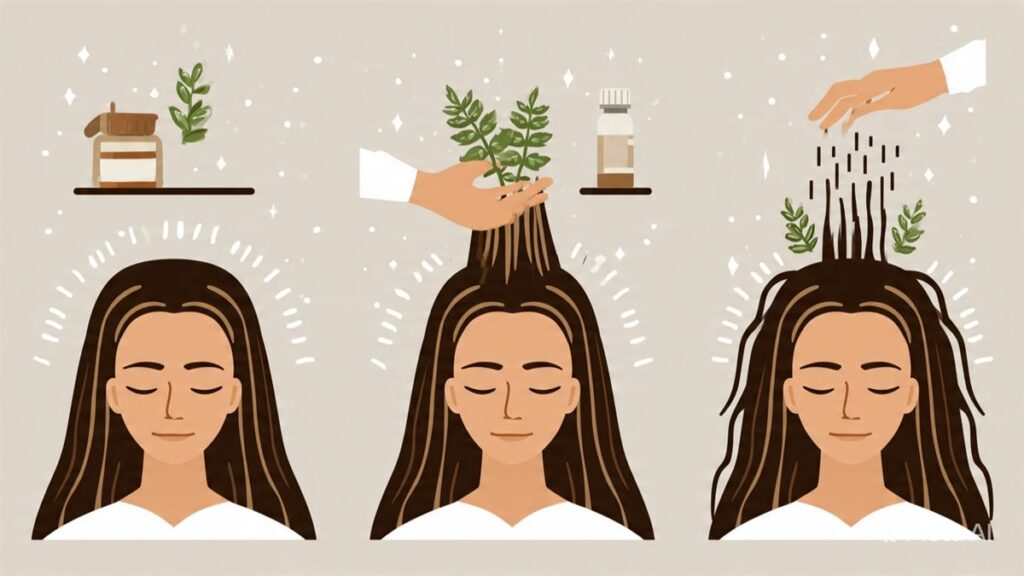
Regular scalp massage (4-5 minutes daily) has evidence supporting improved hair density over time — a 2016 study found that a standardized scalp massage protocol increased hair thickness after 24 weeks. The proposed mechanisms include increased blood flow to follicles, mechanical stimulation of dermal papilla cells (the cells that control hair growth), and reduction of scalp tension (tight galea aponeurotica — the scalp’s fascial layer — may restrict follicle activity). Scalp massage is also highly effective for reducing product buildup when done during shampooing, ensuring thorough cleansing at the scalp level where buildup accumulates.
Product buildup and clarifying
Conditioners, styling products, dry shampoo, and mineral deposits from hard water accumulate on the scalp and hair shaft over time. This buildup can weigh down hair, clog follicles, reduce the effectiveness of other products, and contribute to scalp irritation. A clarifying shampoo (containing stronger surfactants or chelating agents) used monthly removes this buildup effectively. Follow any clarifying wash with a deep conditioning treatment, as clarifying shampoos remove natural oils along with buildup.
Conclusion: think of your scalp as facial skin
The scalp deserves the same thoughtful, individualized care as facial skin — it has similar needs (cleansing appropriate to its sebum production, a balanced microbiome, protection from irritants) and similar vulnerabilities (barrier disruption, inflammation, product buildup). Applying the same ingredient literacy and product-matching principles you’d use for facial skincare to your scalp routine produces comparable improvements.
If you have a scalp condition that doesn’t improve with appropriate over-the-counter products within 4-6 weeks, or if there’s significant redness, scaling, or hair loss associated with the scalp issue, a dermatologist visit is worthwhile — many scalp conditions have prescription solutions that are dramatically more effective than anything available without a prescription.