

Hair loss is one of the most emotionally significant health concerns people face — and one of the most confusing, given the volume of misinformation surrounding it. Products claiming to «stop hair loss» or «regrow hair» are abundant; products that actually work for the most common type of hair loss are far fewer. Understanding the different causes of hair loss is the prerequisite for addressing it effectively — because the treatments that work for androgenetic alopecia are not the treatments for telogen effluvium, and those are different again from what helps nutritional deficiency-related shedding.
The first and most important step is accurate diagnosis. If your hair loss is significant or rapidly progressing, a dermatologist visit is genuinely important before investing in treatments — some causes of hair loss require medical intervention, and some are easily correctable once identified.
The most common types of hair loss
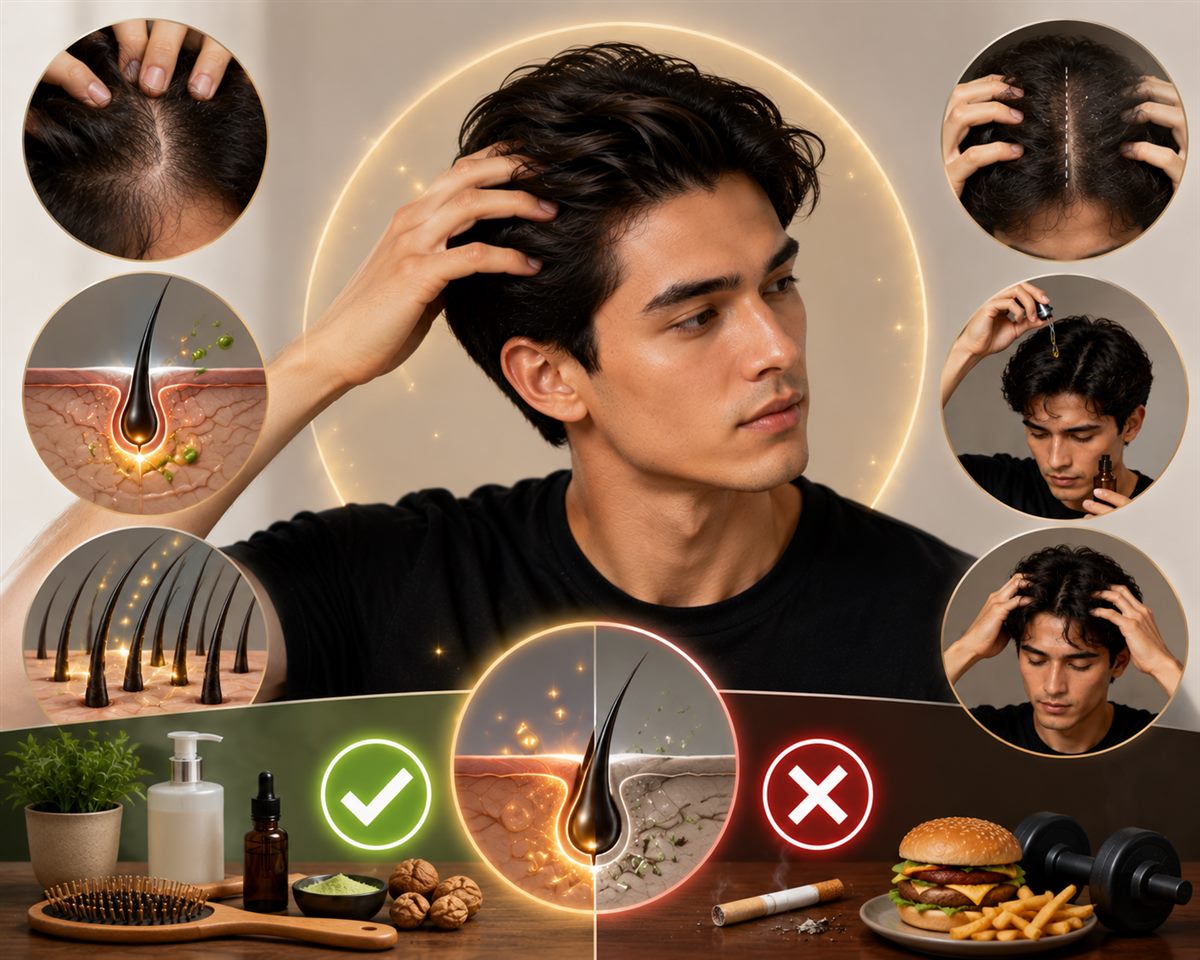
Androgenetic alopecia (genetic hair loss)
Androgenetic alopecia (AGA) — commonly called male-pattern or female-pattern hair loss — is the most common form, affecting approximately 50% of men by age 50 and a significant proportion of women by menopause. It is caused by the sensitivity of certain hair follicles to dihydrotestosterone (DHT), a derivative of testosterone that causes genetically predisposed follicles to progressively miniaturize until they stop producing visible hair. In men, this typically creates the classic receding hairline and crown thinning; in women, it usually manifests as diffuse thinning at the top of the scalp without a receding hairline.
Treatments with strong clinical evidence: Minoxidil (topical 2% or 5%, or oral — now available in low-dose oral formulations shown to be highly effective in women) — extends the anagen (growth) phase and increases blood flow to follicles; requires ongoing use to maintain results. Finasteride (oral, prescription, primarily for men) — inhibits 5-alpha reductase, reducing DHT levels; highly effective but not recommended for women of childbearing age. Low-level laser therapy (LLLT) — FDA-cleared devices with growing evidence for stimulating follicle activity in AGA.
Telogen effluvium (stress-related shedding)
Telogen effluvium (TE) is a temporary, diffuse shedding triggered by a physiological shock or stressor that pushes a large proportion of hair follicles simultaneously into the resting (telogen) phase. Common triggers: major surgery, significant illness (COVID-19 is a well-documented trigger), childbirth, crash dieting or severe caloric restriction, major psychological stress, or beginning/stopping hormonal contraception. The shedding typically begins 2-4 months after the triggering event, peaks over weeks, and resolves on its own within 6-9 months once the trigger is addressed.
Treatment: identify and address the trigger. Ensure adequate nutritional status (iron, ferritin, and protein are particularly important). Minoxidil can be used to shorten the recovery period. The most important thing to understand about TE is that the hair shedding you’re experiencing happened in response to something that occurred months ago — you are not experiencing «ongoing damage» in the present, but the delayed result of a past event.
Nutritional causes of hair loss
Iron and ferritin deficiency
Iron deficiency — particularly low ferritin (the storage form of iron) — is one of the most commonly overlooked causes of hair loss in women. Hair follicles are among the body’s most metabolically active cells, and they require adequate iron to support the rapid cell division of the anagen phase. Studies have found that women with hair loss have significantly lower serum ferritin levels than controls; correcting deficiency (through diet or supplementation) can significantly reduce shedding and support regrowth.
Optimal ferritin for hair health appears to be above 70-80 ng/mL in most studies — a level that many standard blood test «normal ranges» consider acceptable at 12-15 ng/mL. If you’re experiencing hair loss, specifically request a ferritin test and discuss optimal targets with your physician.
Protein, zinc, and biotin
Protein: hair is almost entirely keratin (protein); significant protein deficiency reduces hair growth rate and quality. Zinc deficiency is associated with hair loss and responds well to correction. Biotin deficiency can cause hair loss but is rare in people eating a balanced diet — biotin supplements are widely marketed for hair loss, but evidence supports their effectiveness only in cases of actual deficiency (which is uncommon). For most people with adequate biotin status, supplementation does not produce meaningful improvements.
Conclusion: diagnose first, treat second
The single most important piece of advice for anyone experiencing hair loss is: understand the cause before spending money on treatments. A dermatologist can diagnose the type with a scalp examination and basic blood tests. Treating androgenetic alopecia with nutritional supplements (while your ferritin is normal) will not produce results; addressing an iron deficiency won’t help pattern hair loss. Accurate diagnosis makes every subsequent decision more efficient and effective.
Hair loss is one area where early intervention matters — some types of follicle miniaturization are difficult to reverse once they have progressed significantly. If you notice changes in hair density or distribution, don’t wait months hoping it resolves; seek evaluation sooner rather than later.


