
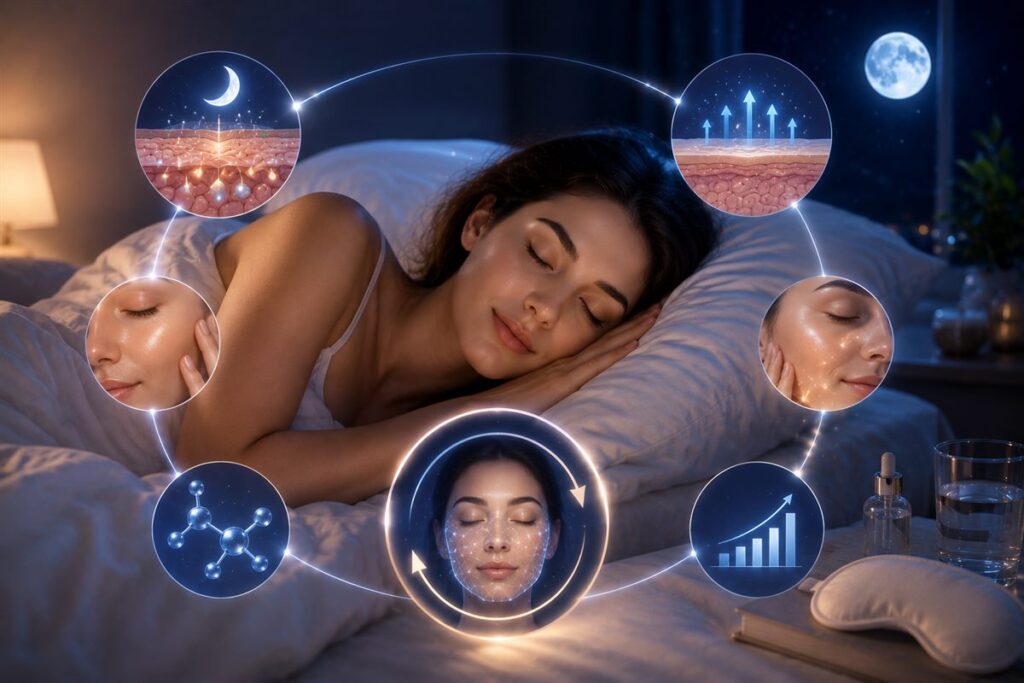
«Beauty sleep» is one of those folk observations that turns out to be scientifically accurate. The skin undergoes its primary repair and regeneration processes during sleep — particularly during slow-wave sleep — and chronic sleep deprivation produces measurable, visible changes in skin appearance, barrier function, and aging rate. The mechanisms are specific enough to be worth understanding, both because they explain why sleep matters for skin and because they inform what skincare practices are best timed to the night window.
What happens to skin during sleep
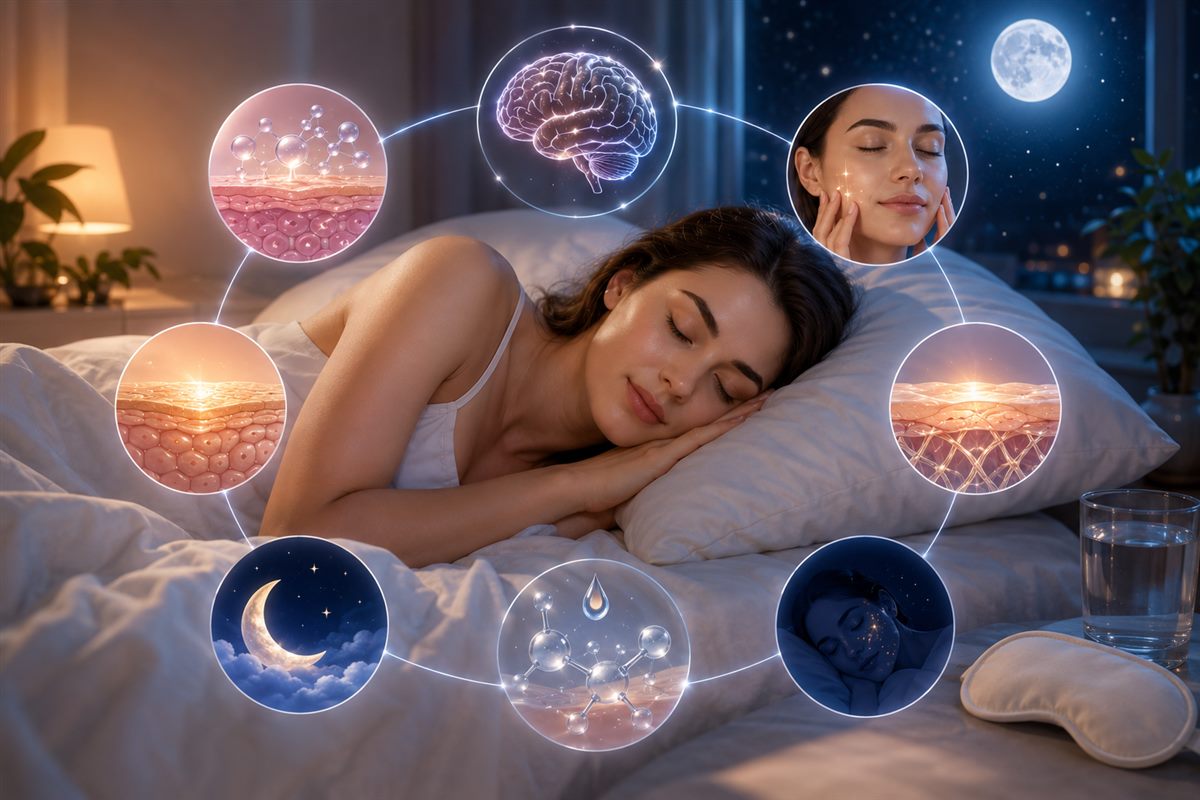
During sleep, several repair processes accelerate simultaneously. Cell division and DNA repair: skin cell mitosis peaks at approximately 2-4am, meaning most new skin cells are produced during the night. DNA damage accumulated during the day (UV, environmental pollutants) is repaired primarily during sleep through base excision repair mechanisms. Growth hormone secretion: the majority of daily growth hormone is secreted in the first two hours of deep sleep — growth hormone stimulates collagen synthesis, cell proliferation, and tissue repair throughout the body including skin. Disrupting deep sleep (through fragmented sleep, late alcohol consumption, or insufficient total sleep) reduces growth hormone availability for repair. Cortisol clearance: cortisol levels are highest in the morning and lowest at midnight; poor sleep keeps cortisol elevated throughout the day-night cycle, and chronic cortisol elevation breaks down collagen through increased matrix metalloproteinase (MMP) activity. Transepidermal water loss (TEWL): TEWL increases slightly during sleep as the barrier relaxes — which is why night moisturizer and occlusive skincare products are most effective when applied before sleep and left on through the repair window.
The research on sleep deprivation and skin
A 2015 study by Oyetakin-White et al. (Clinical and Experimental Dermatology) compared poor sleepers (≤5 hours/night) to good sleepers (7-9 hours/night) and found poor sleepers had significantly higher TEWL, lower skin hydration, and more signs of skin aging — fine lines, uneven skin tone, reduced elasticity, and slower recovery from UV-induced redness. They also had significantly lower self-perception scores for their own appearance. Notably, even after objective measurements, sleep-deprived subjects were rated as less attractive by independent observers. The connection between sleep quality and perceived attractiveness is one of the more underappreciated findings in dermatology research.
Optimizing your nighttime skincare routine
Timing active ingredients for the night window
The increased cell turnover, reduced UV exposure, and slightly elevated skin permeability during the night make it the optimal window for certain active ingredients: Retinoids (retinol, tretinoin) should be used at night — they are photosensitizing under UV and work with the nocturnal repair process. AHAs and BHAs used at night avoid the photosensitization risk and are washed off before morning UV exposure. Heavier occlusives and barrier-repair ingredients (petrolatum, ceramides, heavy oils) applied at night can work without the cosmetic concerns of a greasy morning appearance, and they enhance the reduced TEWL protection during sleep. The «slugging» trend (applying a thin layer of petrolatum as a final occlusive step at night) is evidence-informed — petrolatum is the most effective occlusive available and genuinely seals in the moisture applied underneath it during the night repair window.
Silk pillowcases and sleep position
Sleep position creates mechanical creases in skin through repeated compression — «sleep lines» typically appear on the cheek and décolletage of side sleepers over time. Sleeping on your back eliminates this, though most people cannot fully control sleep position. Silk and satin pillowcases reduce friction on skin and hair compared to cotton (which absorbs moisture from skin and creates more friction), reducing mechanical wear on skin and hair breakage. The evidence for silk pillowcases reducing wrinkle formation is limited but the mechanism is plausible — reduced mechanical stress, reduced moisture absorption.
Conclusion: sleep is the most underrated beauty investment
Consistent 7-9 hours of quality sleep is the single most impactful «product» in any beauty routine — producing effects on skin repair, collagen synthesis, inflammation, and perceived attractiveness that no topical product can replicate. The night skincare window is real and worth using for active ingredients; but using high-quality products without adequate sleep is like watering plants under artificial light — it helps, but it’s no substitute for the real thing.
The beauty sleep prescription: prioritize sleep quality (see sleep hygiene practices in our sleep category), apply active ingredients and occlusives before bed, and consider a silk or satin pillowcase as a low-cost friction-reduction investment. These three things cost less and produce more impact than most skincare products.