
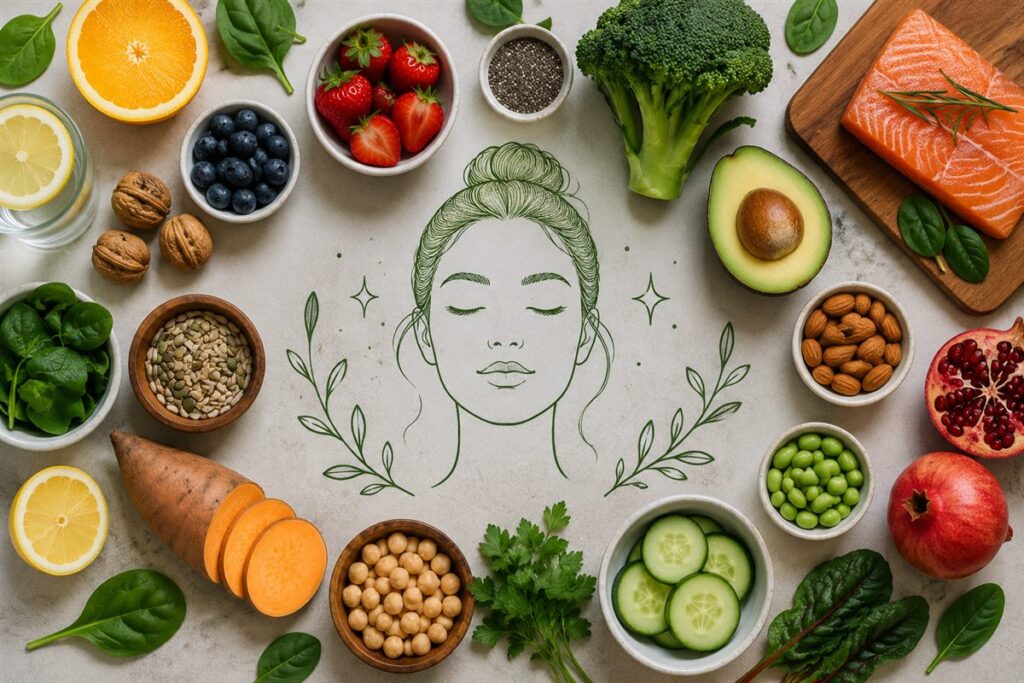
Dermatology for decades maintained that diet had no meaningful effect on skin — a position that has substantially shifted over the past 15 years as research improved. The current evidence shows clear connections between dietary patterns and skin health, particularly for acne, photoaging, barrier function, and inflammatory conditions. Diet is not the only factor — genetics, sun exposure, sleep, stress, and topical skincare all play significant roles — but it is a genuinely modifiable one that many people overlook in favor of product interventions.
Diet and acne: the clearest nutritional skin connection
The diet-acne link has moved from dismissed folk belief to established science. Key findings: High glycemic index foods: multiple RCTs (including the landmark Cordain 2002 observation of no acne in non-Westernized populations, followed by Smith et al. 2007 RCT) show that high-glycemic diets elevate insulin and IGF-1, which increase androgen production and sebum output — the primary drivers of acne. A low-glycemic diet intervention showed significant reduction in acne lesion counts in controlled studies. Dairy: observational studies consistently show an association between dairy consumption (particularly skim milk) and acne. The mechanism appears related to growth hormones and IGF-1 present in milk, not fat content. This is observational — establishing causality requires more controlled trials — but the association is robust enough that dietary dairy reduction is worth trialing in acne-prone individuals. Omega-3 fatty acids: EPA and DHA have anti-inflammatory effects relevant to acne; some evidence for reduced acne severity with omega-3 supplementation.
Nutrition and skin aging
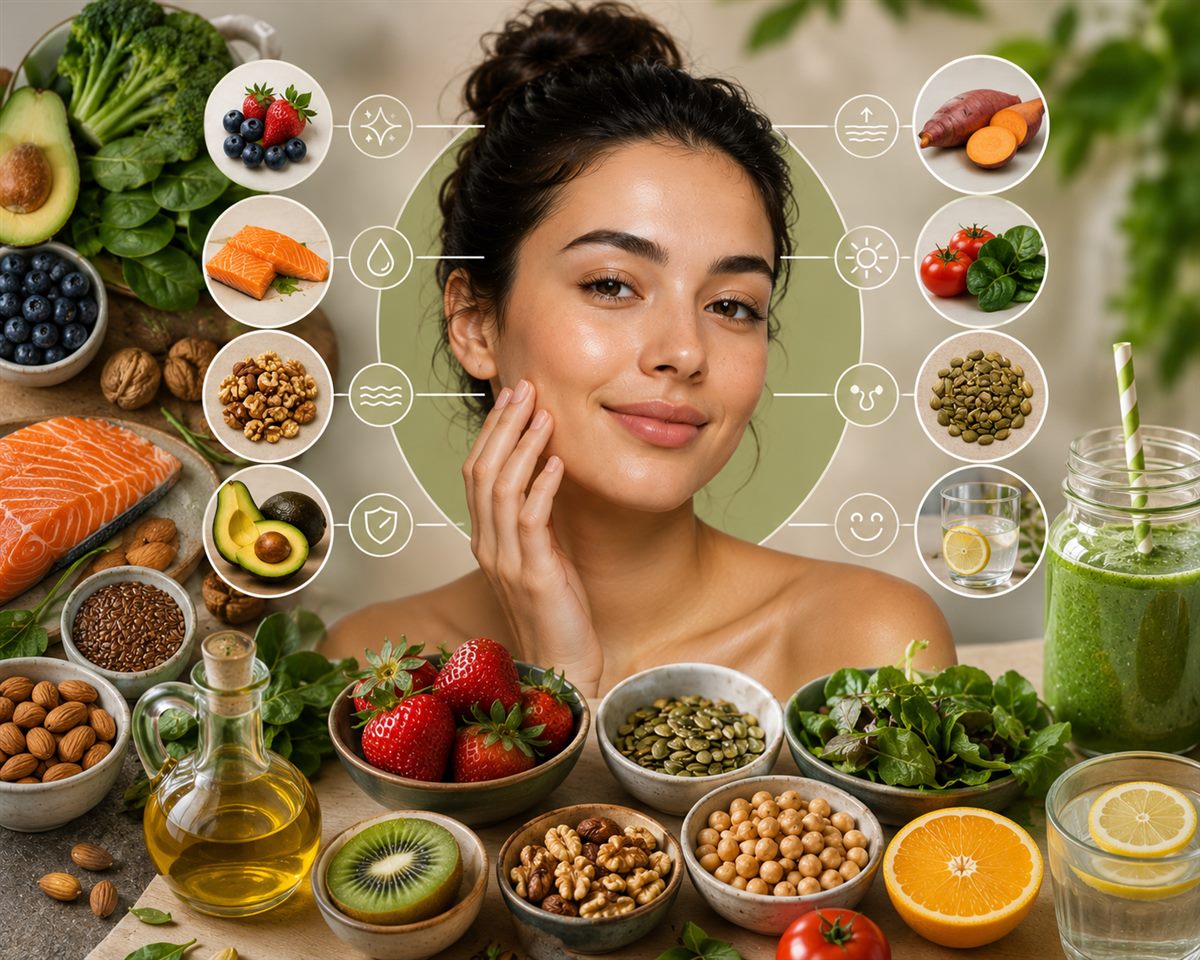
Advanced glycation end products (AGEs) — formed when sugars react with proteins, including collagen — are one of the primary biochemical mechanisms of skin aging. High-sugar diets accelerate AGE formation, cross-linking collagen fibers and reducing skin elasticity over time. The anti-glycation diet is essentially a low-added-sugar, antioxidant-rich diet. Carotenoids from colorful vegetables and fruits (beta-carotene, lycopene, lutein) deposit in skin tissue and provide measurable antioxidant protection; studies show that high-carotenoid consumption improves skin color (yellow-orange tones associated with health attractiveness ratings) and UV resistance. Vitamin C is required for collagen synthesis — deficiency produces obvious skin changes; optimal intake supports the ongoing collagen production that slows with age.
Key nutrients for skin health
Essential fatty acids — barrier integrity
Linoleic acid (omega-6) and alpha-linolenic acid (omega-3) are essential fatty acids the body cannot synthesize — they must come from diet. Linoleic acid is a critical structural component of ceramides, which form the «mortar» of the skin barrier. Dietary deficiency produces a characteristic flaky, rough, impaired-barrier skin. Food sources: flaxseed and hemp seed oil (ALA omega-3), walnuts, fatty fish (EPA/DHA omega-3), sunflower and safflower oil (linoleic acid omega-6). The omega-6:omega-3 ratio in Western diets is typically highly skewed toward omega-6; improving this ratio through more omega-3 sources has anti-inflammatory effects throughout the body including skin.
Zinc and selenium
Zinc is required for wound healing, sebum regulation, and skin cell turnover. Zinc deficiency is associated with acne, delayed healing, and dry skin. Food sources: oysters (highest), red meat, pumpkin seeds, hemp seeds, legumes. Selenium — found in Brazil nuts (2 nuts per day provides adequate selenium), sardines, and sunflower seeds — has antioxidant properties relevant to photoprotection and is required for glutathione peroxidase function in skin.
Conclusion: eat for your skin as you eat for your health — they’re the same diet
The skin-supportive dietary pattern is identical to the broadly health-supportive dietary pattern: abundant colorful vegetables and fruits (antioxidants, carotenoids, vitamin C), adequate omega-3 fatty acids (fatty fish, flaxseed, walnuts), limited added sugar and refined carbohydrates (anti-glycation, acne control), adequate protein (collagen synthesis), and good hydration. There is no «skin superfood» that compensates for a poor overall dietary pattern.
For people with acne, the most evidence-supported dietary interventions are: reduce high-glycemic foods, trial dairy reduction for 6-8 weeks and observe response, and optimize omega-3 intake. For everyone else, the most impactful nutritional move for skin is simply eating a varied, whole-food-predominant diet and maintaining adequate hydration — the foundation that all the targeted skin nutrients depend on.