

Macronutrients — protein, carbohydrates, and fat — are the three categories of nutrients that provide calories and form the structural basis of the diet. Popular nutrition culture has a history of demonizing one macronutrient at a time (fat in the 1980s, carbohydrates since the early 2000s, sometimes protein) while elevating the others. This has created widespread confusion about basic nutritional concepts. Understanding what each macronutrient does, how much is needed, and where to find quality sources is foundational nutrition literacy — and it’s considerably less complicated than diet culture makes it seem.
Protein: the most satiating macronutrient
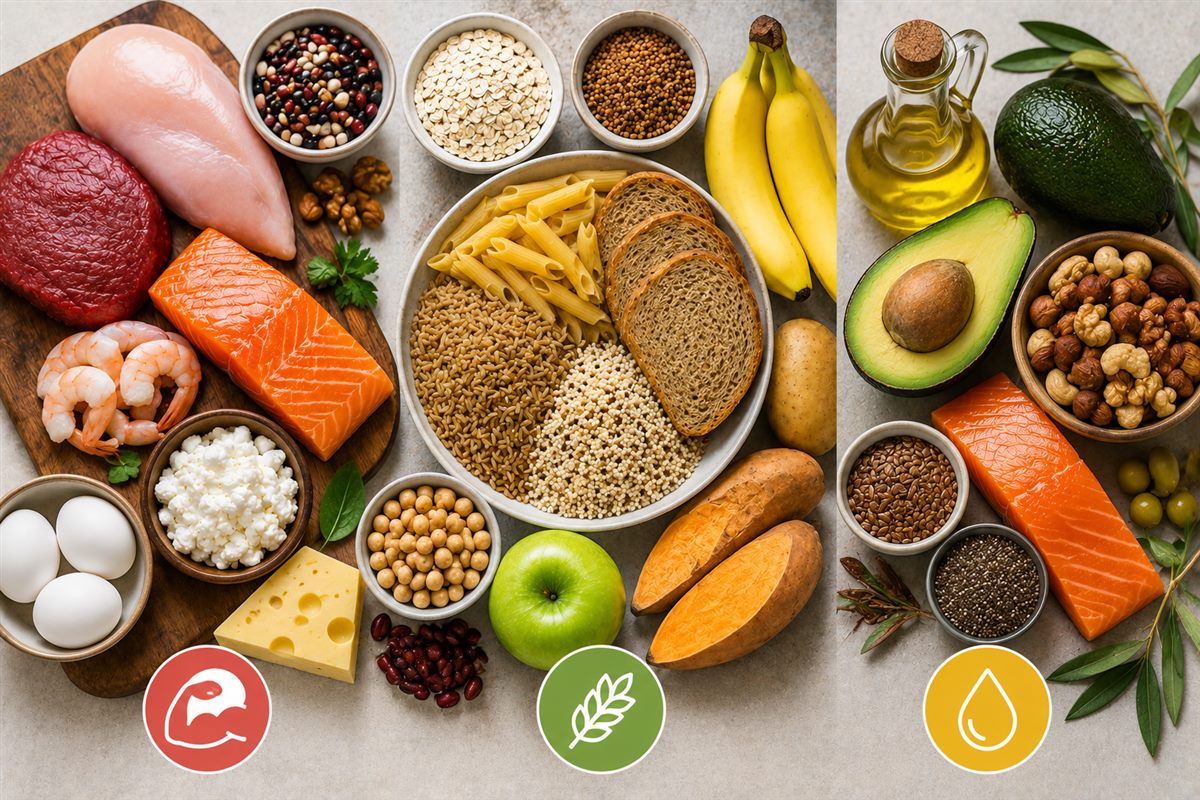
Protein is made of amino acids — 20 in total, 9 of which are essential (the body cannot synthesize them and they must come from food). Functions: muscle protein synthesis and maintenance, enzyme production, immune function (antibodies are proteins), hormone synthesis (insulin, glucagon), transport proteins (hemoglobin, albumin), and structural proteins (collagen, keratin). Protein is uniquely satiating — gram for gram, it produces greater fullness than carbohydrates or fat, partly because of its thermogenic effect (digesting protein costs more energy than digesting other macronutrients) and its effects on satiety hormones (ghrelin suppression, GLP-1 and PYY stimulation).
How much protein?
The RDA of 0.8g/kg/day is the minimum to prevent deficiency in sedentary adults. Current research supports higher intakes for health optimization: 1.2-1.6g/kg for generally active people; 1.6-2.2g/kg during periods of intensive strength training or muscle-building; and higher intakes for older adults (where 1.2-1.6g/kg helps counteract sarcopenia — the age-related loss of muscle mass). Complete protein sources containing all 9 essential amino acids: animal proteins (meat, fish, eggs, dairy) and soy, quinoa, and buckwheat among plants. Combining complementary plant proteins (legumes + grains) achieves complete amino acid profiles.
Carbohydrates and fat: quality over quantity
Carbohydrates: fiber is the key variable
Carbohydrates provide glucose — the preferred fuel for the brain (using ~120g per day) and the primary fuel for muscles during moderate-to-high intensity exercise. The crucial quality distinction is fiber content. Dietary fiber (soluble and insoluble) feeds the gut microbiome, slows glucose absorption, improves cholesterol profile, promotes satiety, and reduces risk of type 2 diabetes, cardiovascular disease, and colorectal cancer. Most people consume roughly half the recommended daily fiber intake (25-38g). Choosing whole grains, legumes, vegetables, and fruits over refined carbohydrates is essentially choosing high-fiber over low-fiber sources — this is the carbohydrate distinction that actually matters for health, not the mere presence of carbohydrates in the diet.
Fat: essential and often misunderstood
Dietary fat is essential for: fat-soluble vitamin absorption (A, D, E, K), cell membrane integrity, hormone synthesis (all steroid hormones are synthesized from cholesterol), brain structure (the brain is approximately 60% fat), and anti-inflammatory signaling (omega-3 fatty acids). The distinction that matters in fat quality is between saturated/trans fats (associated with cardiovascular risk in excess) and unsaturated fats — monounsaturated (olive oil, avocado, almonds) and polyunsaturated, particularly omega-3s (oily fish, walnuts, flaxseed) which are anti-inflammatory and cardioprotective. The original «all fat is bad» message collapsed when the evidence showed that replacing saturated fat with refined carbohydrates produced worse outcomes, not better.
Conclusion: no macronutrient deserves elimination
Understanding macronutrients demystifies most diet debates. Every major macronutrient has essential functions that cannot be replaced by the other two. Quality — processing level, food form, fiber content, fat type — matters far more than the macronutrient category itself. A diet with adequate protein (1.2-1.6g/kg), quality carbohydrates (fiber-rich whole foods), and healthy fats (predominantly unsaturated, omega-3 emphasis) covers the macronutrient foundations regardless of the specific foods chosen to achieve it.
Rather than counting grams of each macronutrient, most people achieve better compliance and outcomes from the food-first approach: eat a wide variety of minimally processed whole foods, prioritize vegetables and legumes, include adequate protein at each meal, and use healthy fats for cooking and dressings. The macros take care of themselves.